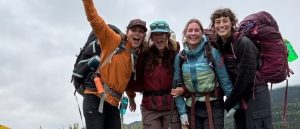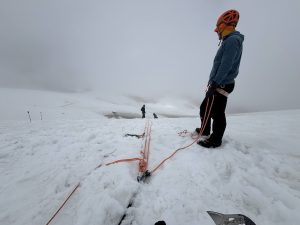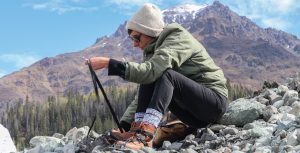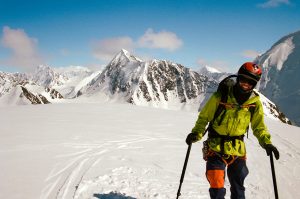

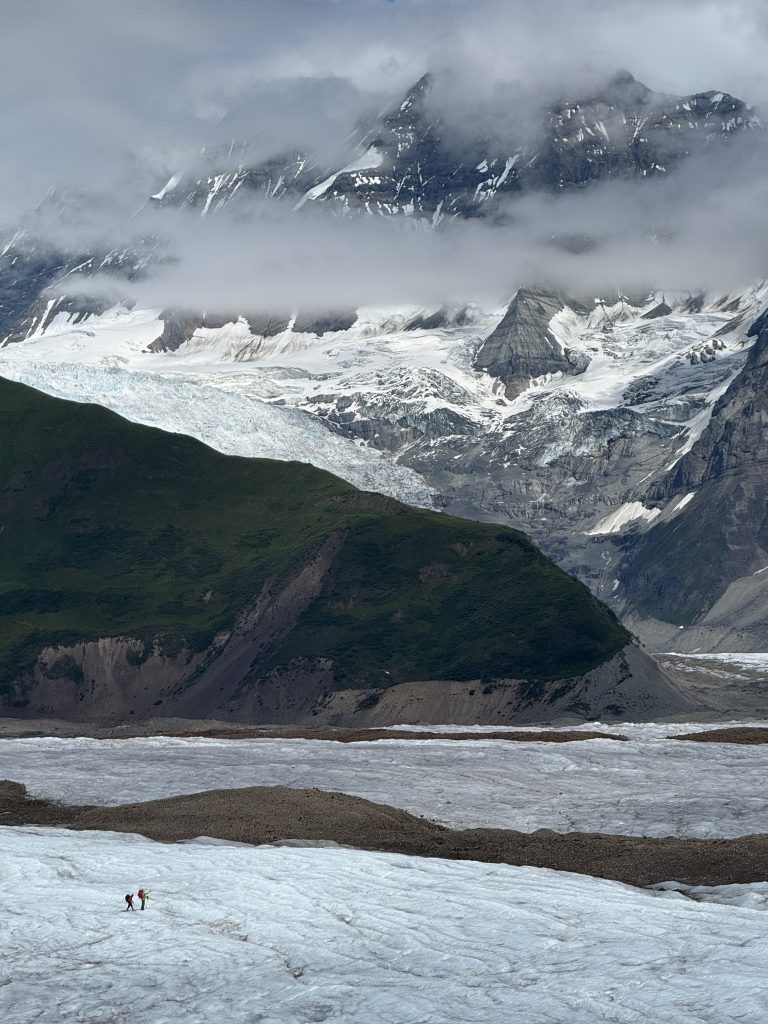
The Glacier and Tundra backpacking trip is a challenging and uniquely Alaskan trek across the Kennicott Valley. It’s full of rugged terrain, incomparable views of Mt. Blackburn (5th tallest peak in the US) and other snowy peaks, and extensive glacial exploration.
Intern Emma McGrath recalls her experience co-guiding on the Glacier and Tundra trip in late July.
My first experience co-guiding here at St. Elias Alpine Guides could not have been better. I feel incredibly lucky to have had my friend and fellow guide, Roy, to learn from during our journey through the glacier and tundra.
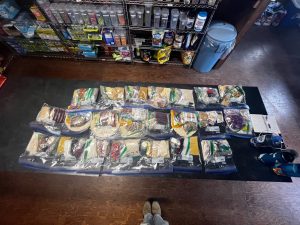
Before prepping for this trip, I had no idea how much planning and logistics went on behind the scenes. From route planning based on the desired experience to learning everyone’s dietary preferences and strategically packing meals, I realized that the foundation for a successful trip is laid well before that first step into the backcountry. Thankfully, the days we spent packing and preparing were fueled by our excitement to get out there, so it never felt like a chore.
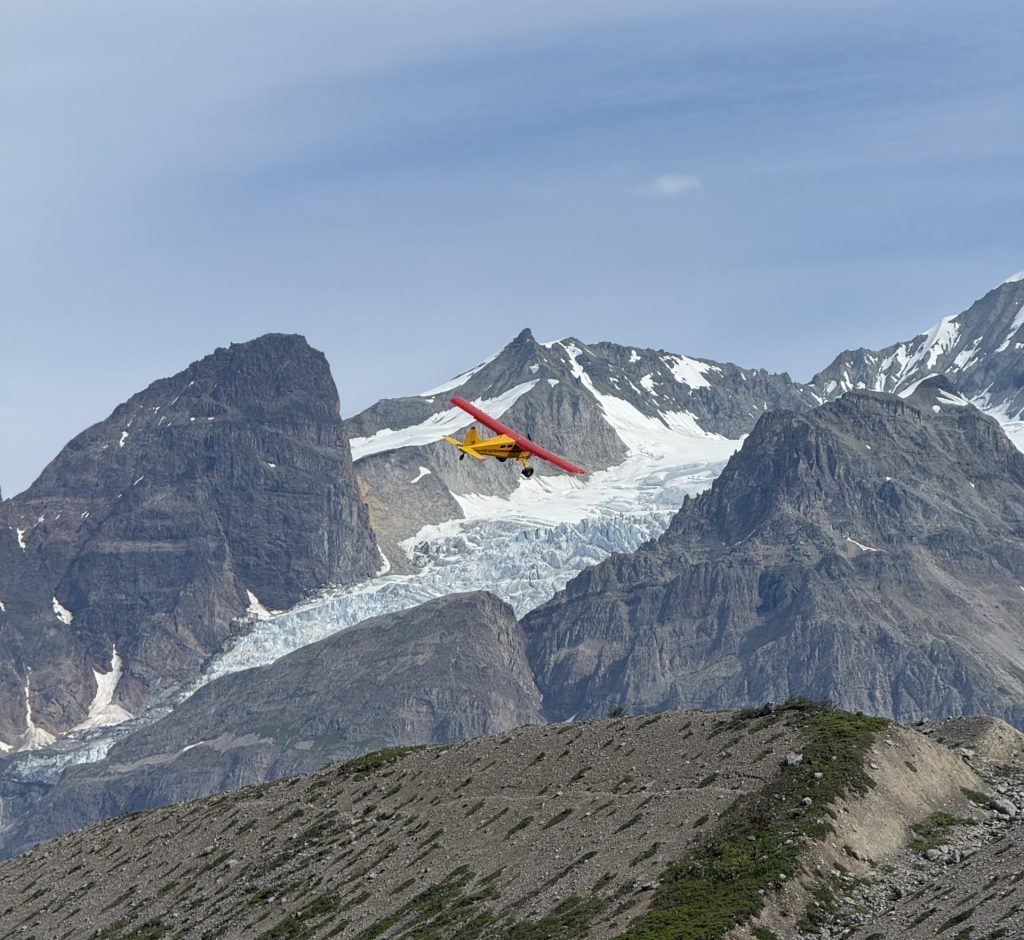
After doing a group gear explode (taking everything out of our packs and double-checking that we had what we needed), we drove to the airstrip, loaded the plane with our gear, and took to the skies. We flew over the Kennicott Glacier to the Fosse airstrip, where our pilot, Keen, made a smooth landing with phenomenal views of Mount Blackburn and the glacier below.
We unloaded our gear and stood in awe as the plane took off right in front of us, arcing past the icy peaks and giving us a beautiful show. When we could no longer hear the hum of the engine, it truly felt like the adventure had begun. The feeling of being remotely immersed in such a dramatic landscape is unparalleled. Roy and I fist-bumped and began leading the group to find a good campsite for the night.
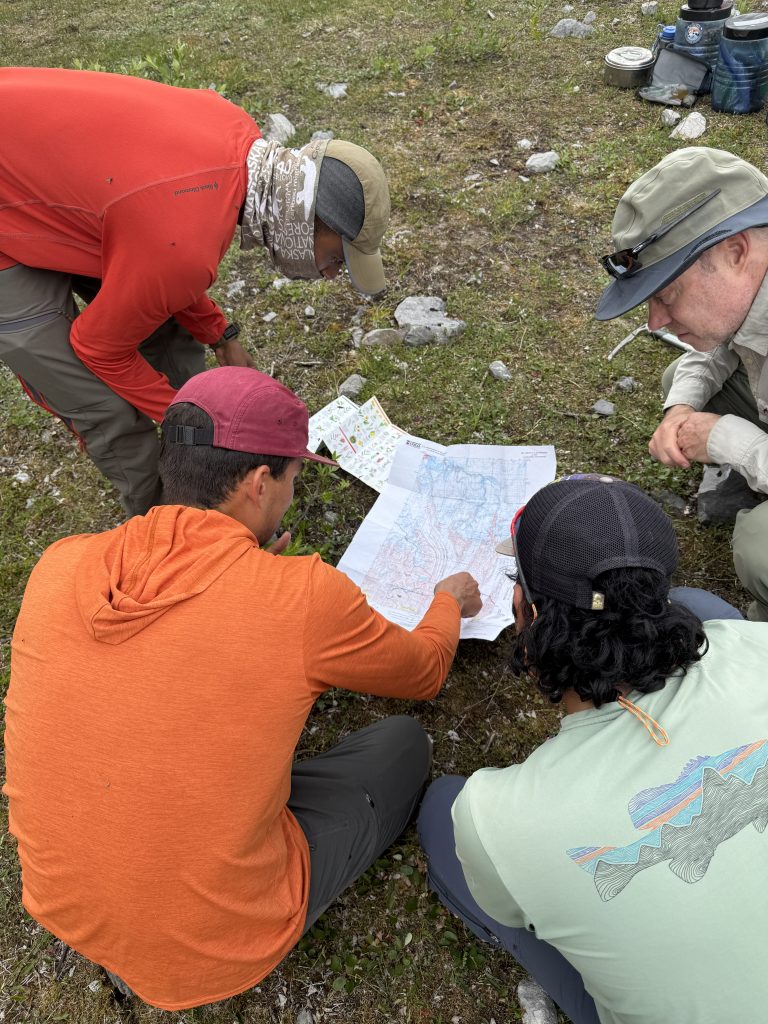
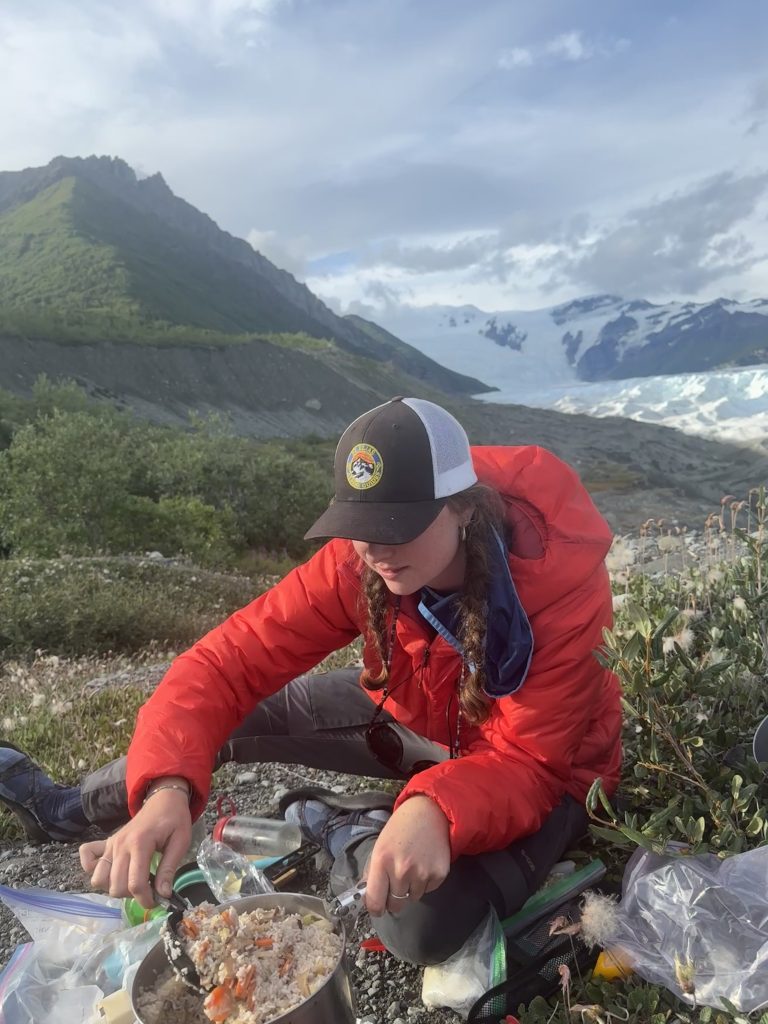
Using knowledge passed down from other guides, we chose a spot that kept us close to both water and incredible views. We set up camp, ate a delicious lunch with fresh veggies and cheese, and huddled together to go over our plan for the trip. Feeling excited to explore, we left our heavy packs behind and set off for an afternoon hike up the mountain. Roy brought along a flora identification pamphlet, and we had so much fun finding some of Alaska’s most beautiful wildflowers.
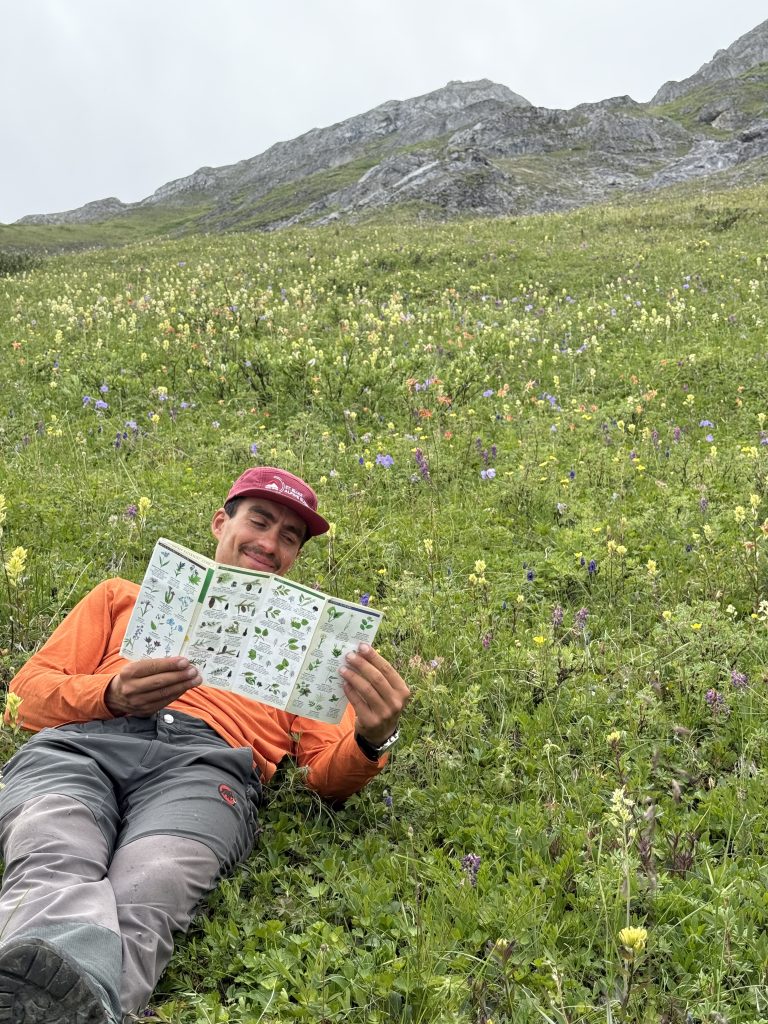
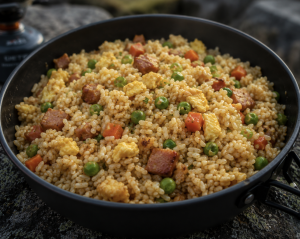
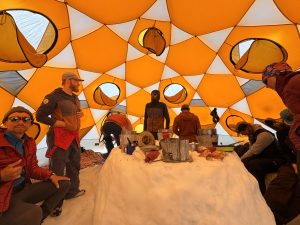
In no rush to head back, we took a “siesta” in the grass, soaking in the moment and the views. The hike down was even more fun—we found a snow patch, slid down it while testing our balance, and threw snowballs at each other. By the time we returned to camp, it was dinner time. We ate my favorite meal of the whole trip: the Bombay buffet. We set up our cook tent due to a slight drizzle, but it was cozy being packed in together, sharing stories and learning more about each other.
For our first night, I brought banana bread I had made using my grandma’s recipe. We practically inhaled it before heading to bed, ready to rest up for the big day ahead.
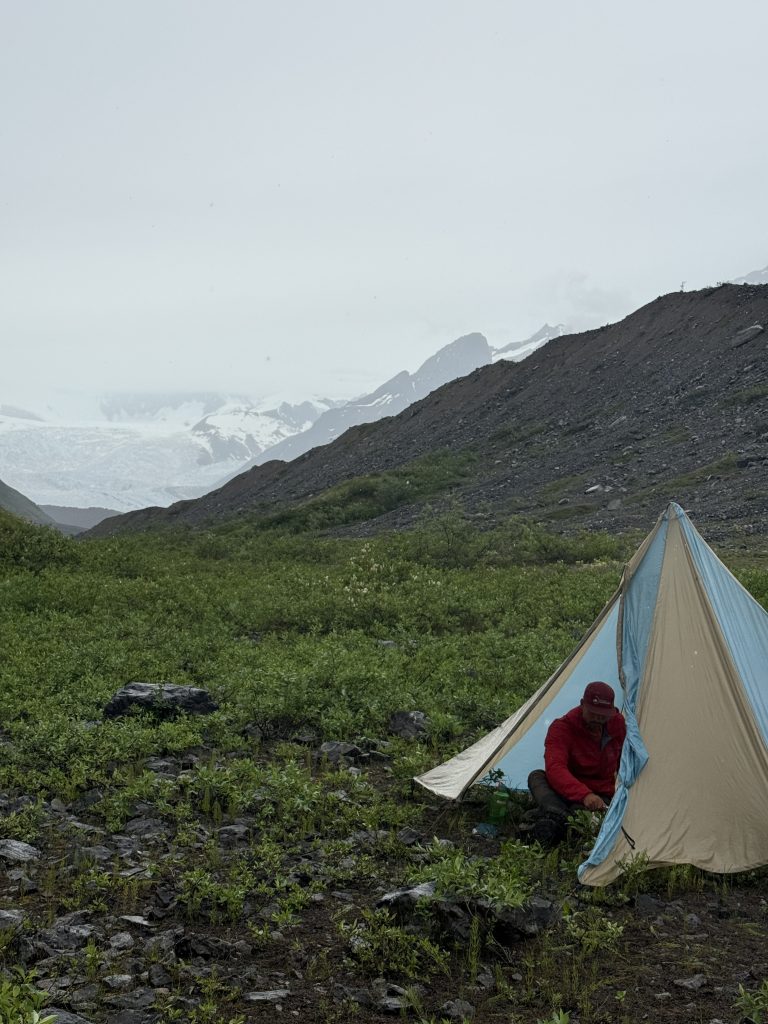
The next morning, we enjoyed hot drinks and breakfast before packing up. During our flight in, we had spotted a good place to hop onto the glacier—convenient, considering how difficult lateral moraine can be to cross. Navigating the sliding rocks required confident strides, and I was amazed by the stability and cohesion of our group. By the time we stepped onto the glacier, I knew it was going to be a great day.
We encountered the biggest moulin I had ever seen—a seemingly bottomless drain funneling water into the depths of the ice. We passed bright blue pools, glacial rivers, and dimpled ice walls that formed surreal valleys around us. We stopped for a snack and filled our bottles with pristine glacial water. Yum!
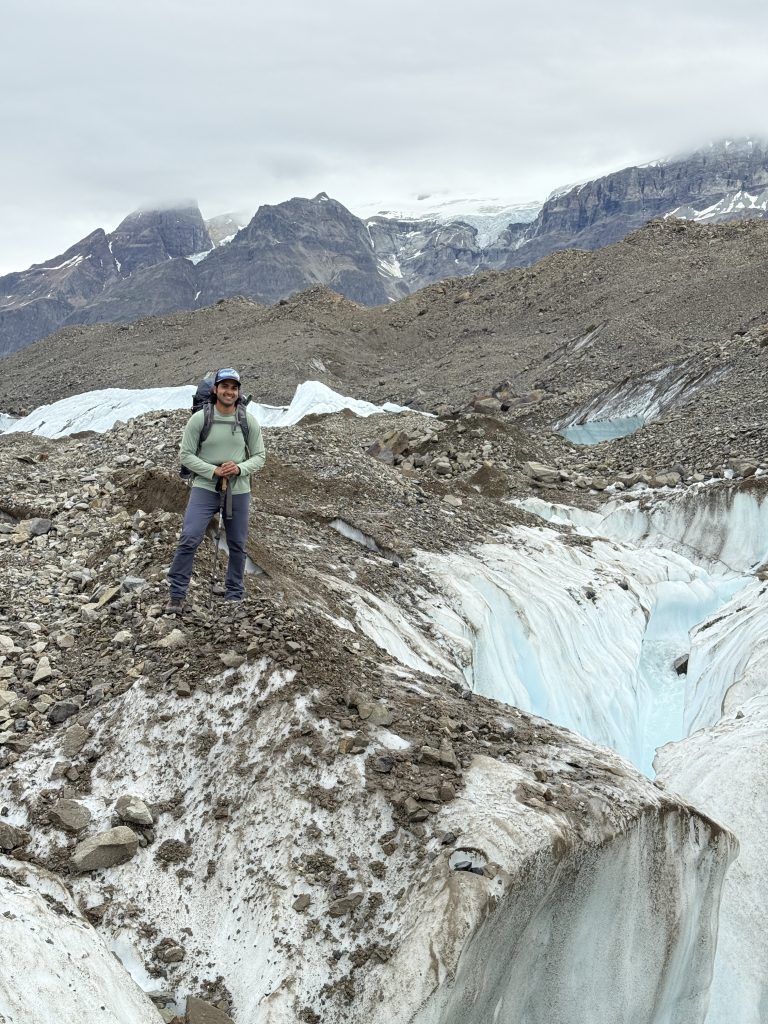
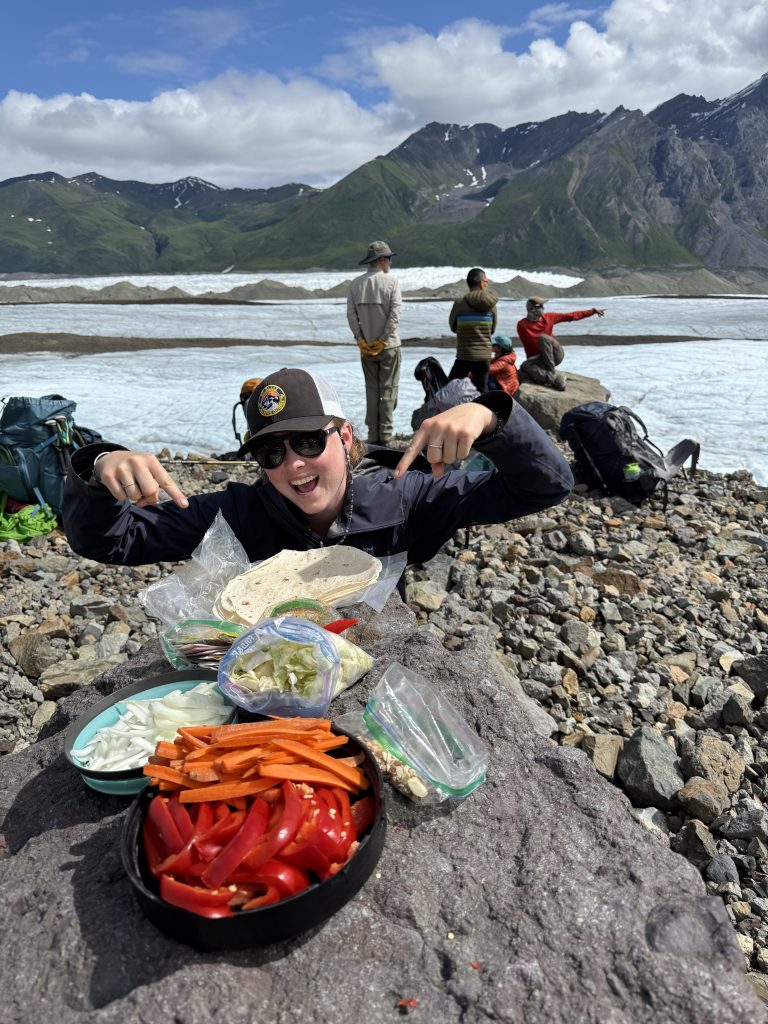
Eventually, we reached a glacial river too wide to cross. We followed it downstream until we found a narrower section, tossing a few rocks in before helping everyone across, cheering each other on. A steep push up rewarded us with 360-degree views of the valley. Lunch is always better with a view, so we pulled out fresh veggie wraps and enjoyed the scenery.
As we continued across the glacier, Roy and I often ran ahead to scout the best route. Glacier travel is tricky—not just because of the terrain, but because the hills and valleys are often too steep to travel in a straight line. Crossing a glacier involves detours, backtracking, and constant decision-making, but that’s what makes it special. Successfully navigating that environment is one of the most satisfying feelings, and that’s exactly what we did.
That night, we had the option to camp on the glacier or push all the way across. The group had enough energy and stoke, so we decided to cross the rest of the glacier. Getting off the glacier was as challenging as getting on, but Roy’s experience helped us avoid the steepest sections and reach dry land faster than expected.
Even though the day went as well as a glacier travel day can go, it was by no means easy. The secret to enjoying it lies in admiring the unique features at every opportunity, and never forgetting how extraordinary it is to be standing on a glacier in Wrangell–St. Elias National Park. It truly never gets old.
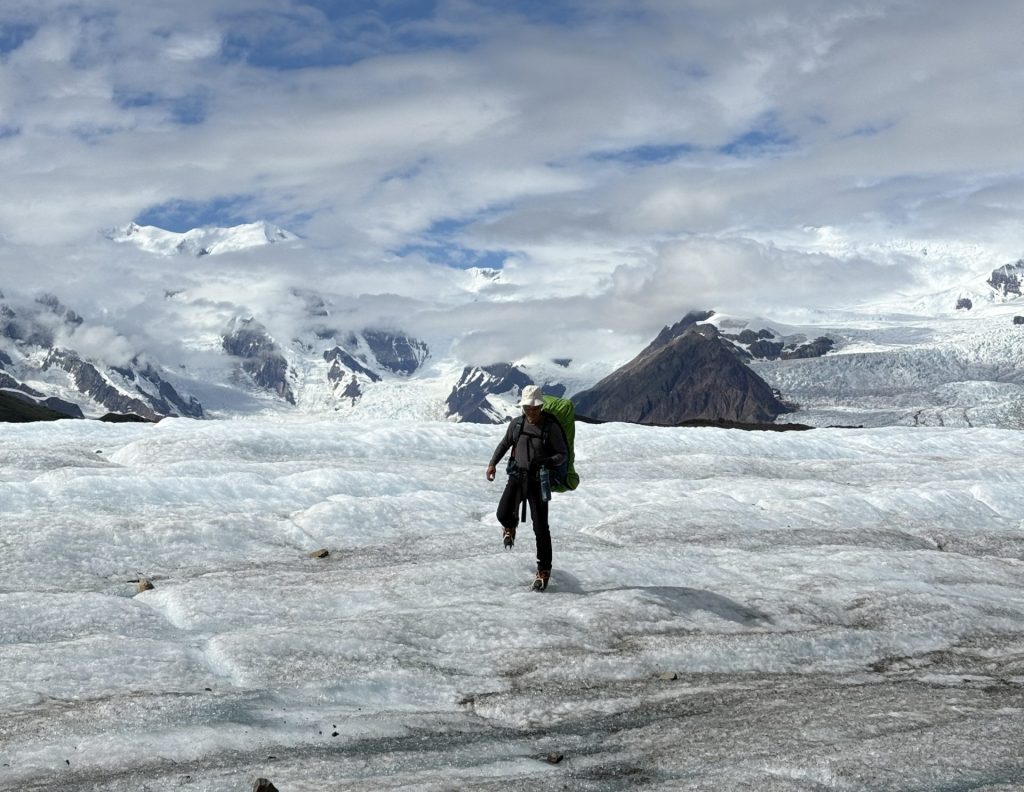
Off the ice, we camped beside a turquoise-blue lake with stunning views of a bright white icefall. Exhausted from the day, we felt that the beautiful evening—with clear skies and a light breeze—was our reward. We went to bed early, all eager for a good night’s rest.
I was excited to explore the Gates glacier the next day, especially since I had been there before and would be leading the group. There are a few ways to get onto the ice—some harder than others—and after learning my lesson on my last exploration, I was confident to find an easier route this time around.
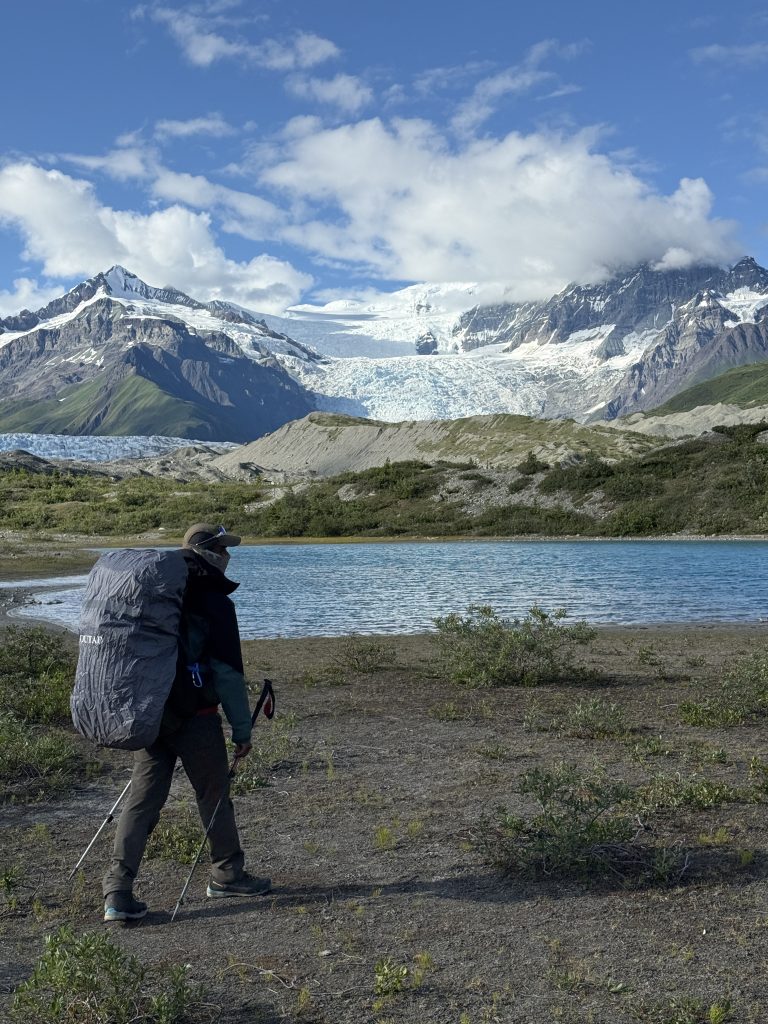
Sure enough, getting on the glacier was much easier with the new route I scouted out. We taught the group more advanced crampon techniques to help them cover steeper terrain, and worked our way up to the “shark fins”—cracked ice towers that make you feel small in the best way imaginable. It was amazing to watch everyone gain confidence in their new skills and lend a helping hand to each other when needed. We ate my favorite lunch on the ice (buffalo chickpea wraps), took pictures of our group having a blast together, and then scouted a route toward the glacier’s origin icefall.
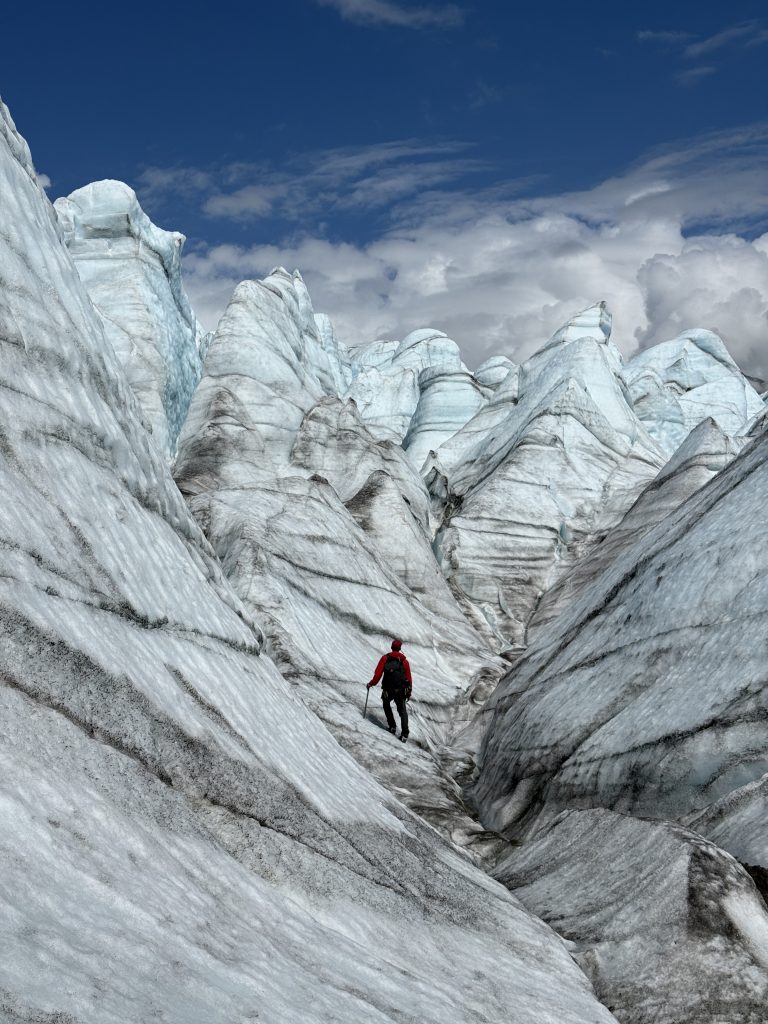
Clouds and rain rolled in, but it felt like they only enhanced the blue hues of the ice. After trekking through what felt like another planet, we shared a snack break in front of the icefall. It was so large that it felt like it was right in front of us, even though it was still miles away. On the way back, we climbed up to a high point that Roy found on one of his previous trips with panoramic views of the valley. It was a tough ascent, with the slipperiest moraine we encountered the whole trip, but like any good adventure, the harder the climb, the more profound the view. We lingered at the top, soaking in the raw beauty of the valley through the rain. Back at camp, we ate dinner, shared hot chocolate and tea, and went to bed ready for the next day.
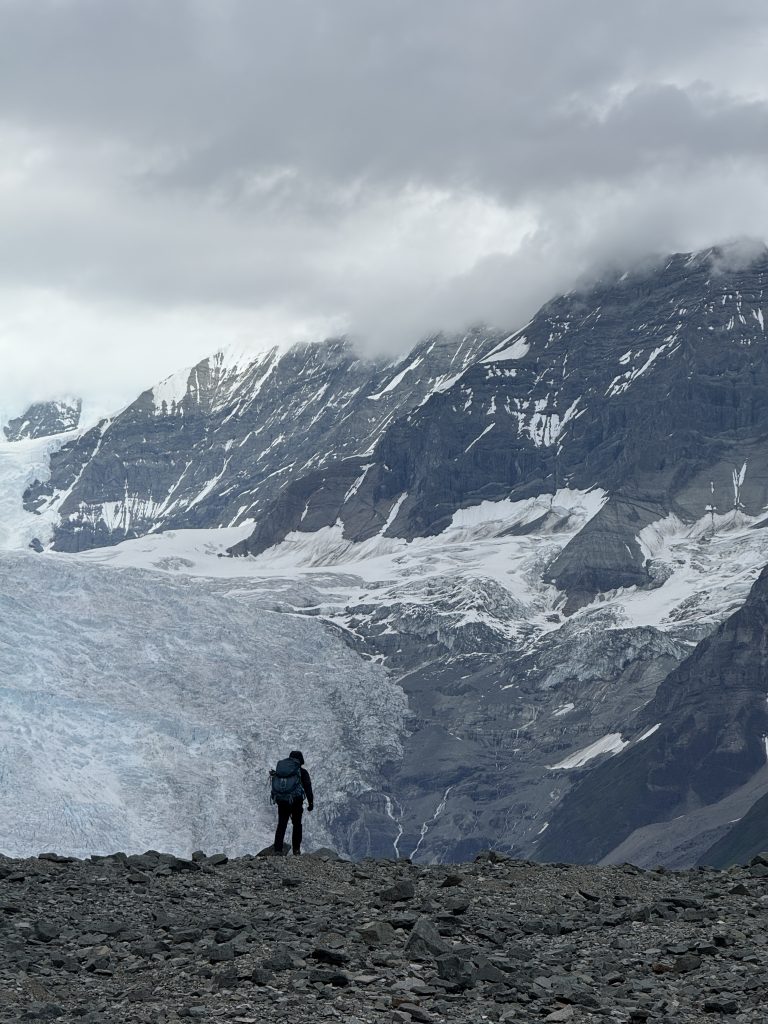
We woke to rain and wind, which meant breakfast together in the cook tent while we waited for a break in the weather.Once the rain let up, we packed quickly and began trekking through the basin. Bushwhacking is inevitable there, but we knew a route that would save us the most time and energy. After a hot lunch of fancy mac and cheese, we faced our fair share of “shwackin.” I loved how no one got frustrated or discouraged—everyone embraced the raw Alaska factor of blazing your own trail. Golden sun on the mountains greeted us at our next campsite, and I’d argue the view was the best of the entire trip.
We dried our rain-soaked gear in the sun, ate a delicious dinner, and ended the night sharing our highs and lows—a tradition we kept every evening. Being tired and happy is one of the best feelings in the world.
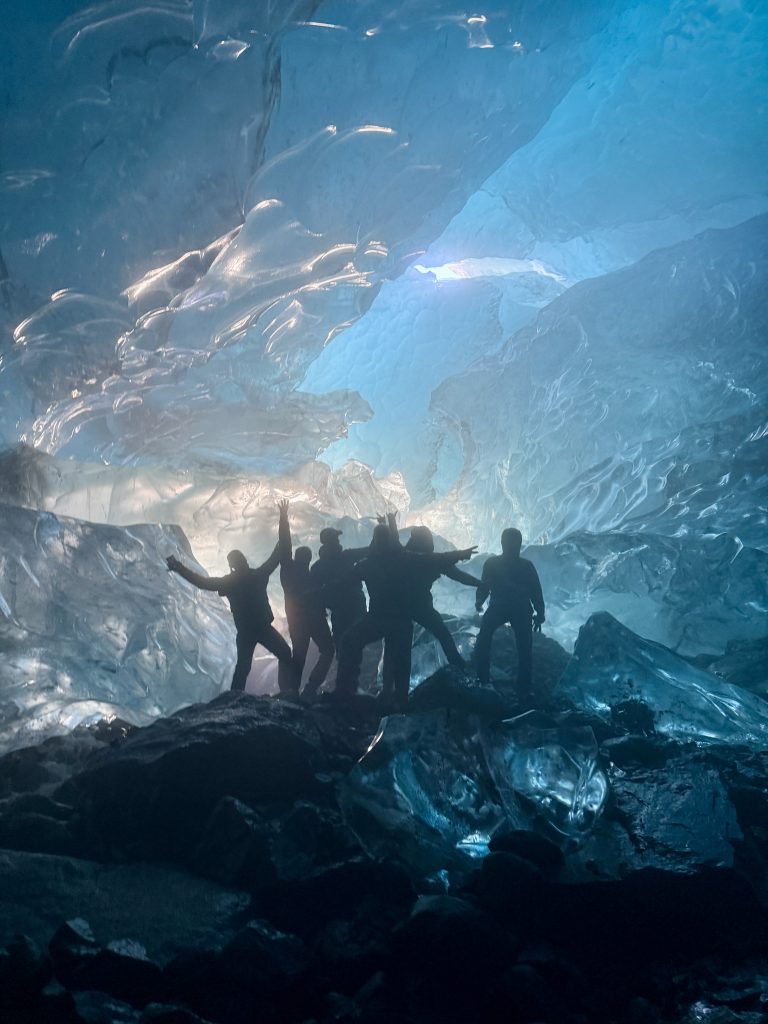
Our final full day of the trip began with a descent onto our third glacier—one Roy knows like the back of his hand. We made our way to an ice cave that we were eager to show the group. After confirming it was safe to enter, we led everyone into the deep blue dome, an otherworldly space that never ceases to leave me speechless. Words and photos just don’t do it justice, but we had to take a silly picture for the memories.
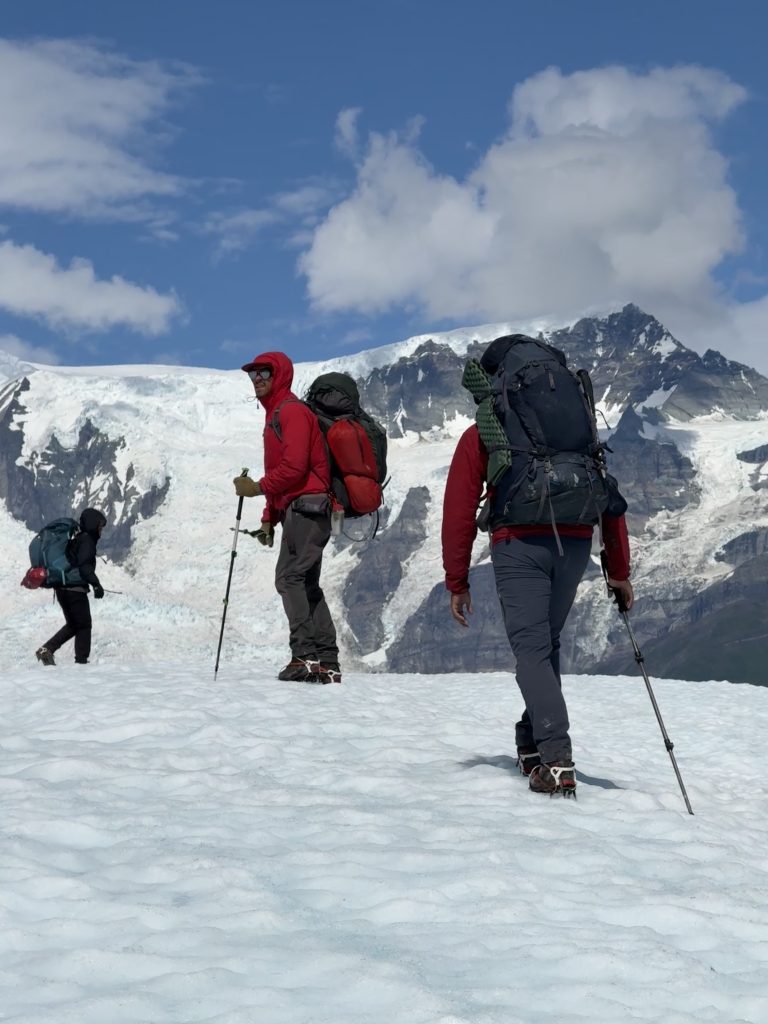
Back in the daylight, we headed toward the Stairway Icefall—the longest icefall in the world. Along the way, we stumbled upon more blue pools, moulins, and stunning ice features before having lunch on the glacier. Roy knew where all of the best stops were and also the easiest way to get to them. With no set destination, we kept going, simply enjoying the journey. One crampon broke, which is to be expected after miles of glacial travel, so we were prepared and had it repaired within minutes.
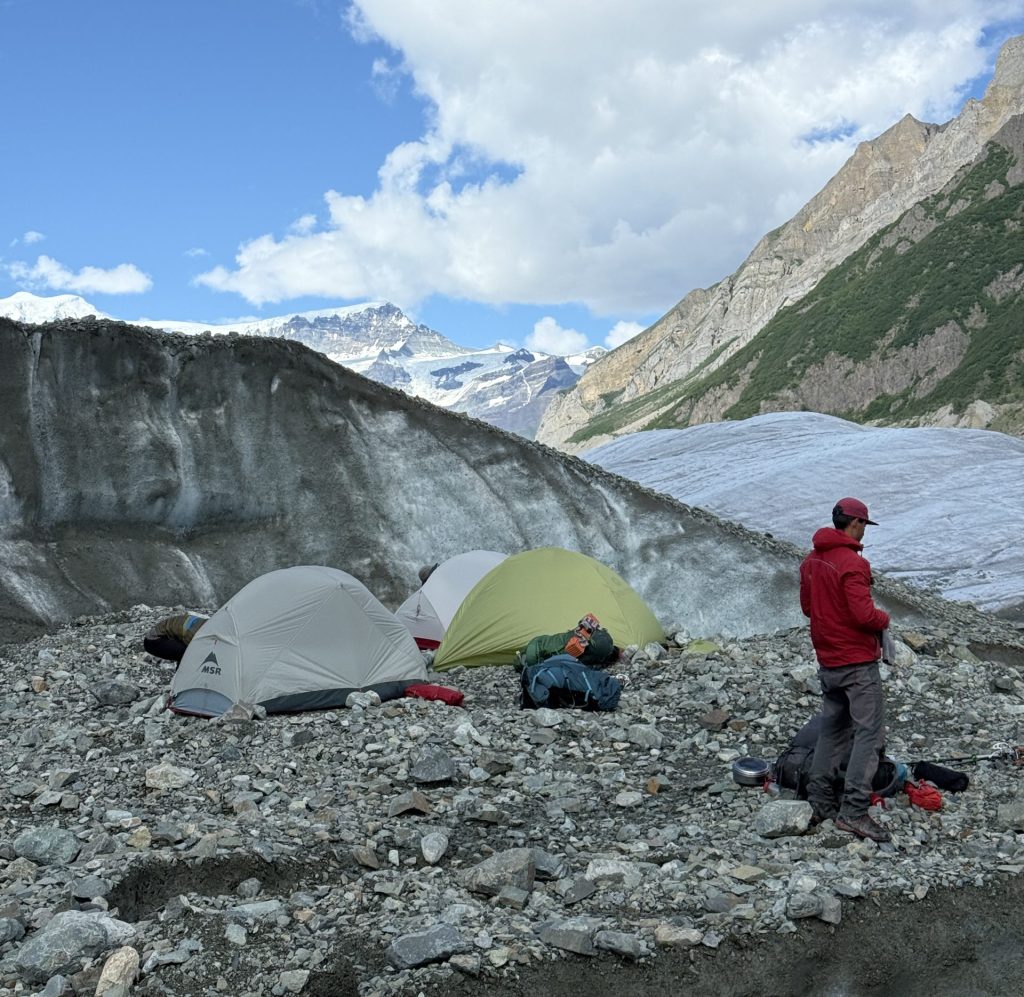
Feeling full of views and memories, we decided it was time to find a campsite on the moraine. Although we could have made it to dry land, we wanted our last night to be spent on the glacier. We knew where to find the perfect spot—sheltered from wind and with plenty of flat tent sites.
With daylight to spare, we played “Glacier Olympics.” Each of us picked a country to represent and competed in silly games using ice, rocks, and sticks—ideas born from many miles of hiking. It was the perfect way to end the trip, and when we shared our highs and lows after dinner, it was everyone’s high.
The next morning, we packed up slowly, as if none of us wanted to leave. The entire journey back to Kennecott was filled with laughter, reminiscing, and gratitude—not just for the incredible experience, but for the amazing people we got to share it with.
Thank you, Roy, Saurabh, Dipti, Tejas, Lyndon, and Steve, for making six days full of a lifetime of memories!
written by: Emma McGrath
updated 08/2025
Inspired to experience the Glacier and Tundra for yourself? Learn more about this uniquely Alaskan backpacking adventure here!