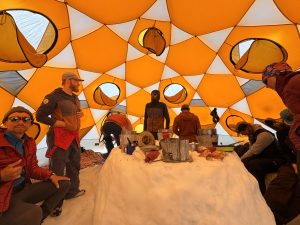

In 2002, David Roberts published “Escape from Lucania.” The book details the harrowing journey of Brad Washburn and Bob Bates as they complete a first ascent of Mt. Lucania and the disaster that follows in their endeavor to escape the grips of the rugged Wrangell wilderness and return home. Bates and Washburn have become figures of almost mythical proportions in the world of Alaskan mountaineering and exploring and the documentation of their adventure in the Wrangells has inspired countless a SEAG guide to venture into the backcountry in the pursuit of a true Wrangell epic. When fellow guide Amelia Owen, myself, and two unsuspecting friends set out on a backpacking trip this summer, however, we had high hopes of avoiding any such calamities. The Wrangells had other plans. This is the story of the trip we have fondly dubbed “Escape from Nizina.” Buckle up.
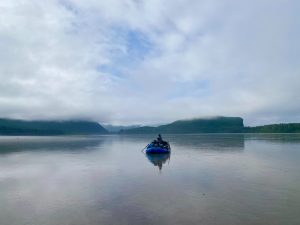
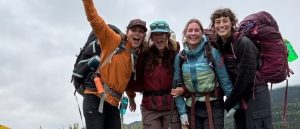
It is important to note that the two unsuspecting friends we brought with us on this trip were visiting from Salt Lake and had never been to Alaska before. Originally, they’d planned to stay in McCarthy for a long weekend and adventure on the Root Glacier (a worthwhile pursuit, to be sure), but Amelia and I decided we needed to give them the real Wrangell experience– we advised them to bring the two most important items on any Wrangell backpacking trip: good boots and a good attitude. Armed with these essentials the four of us set off to the airstrip from which we were flown up the Nizina River and dropped off at Nizina Lake. We watched the Beaver depart, donned our glitter, and were truly alone.
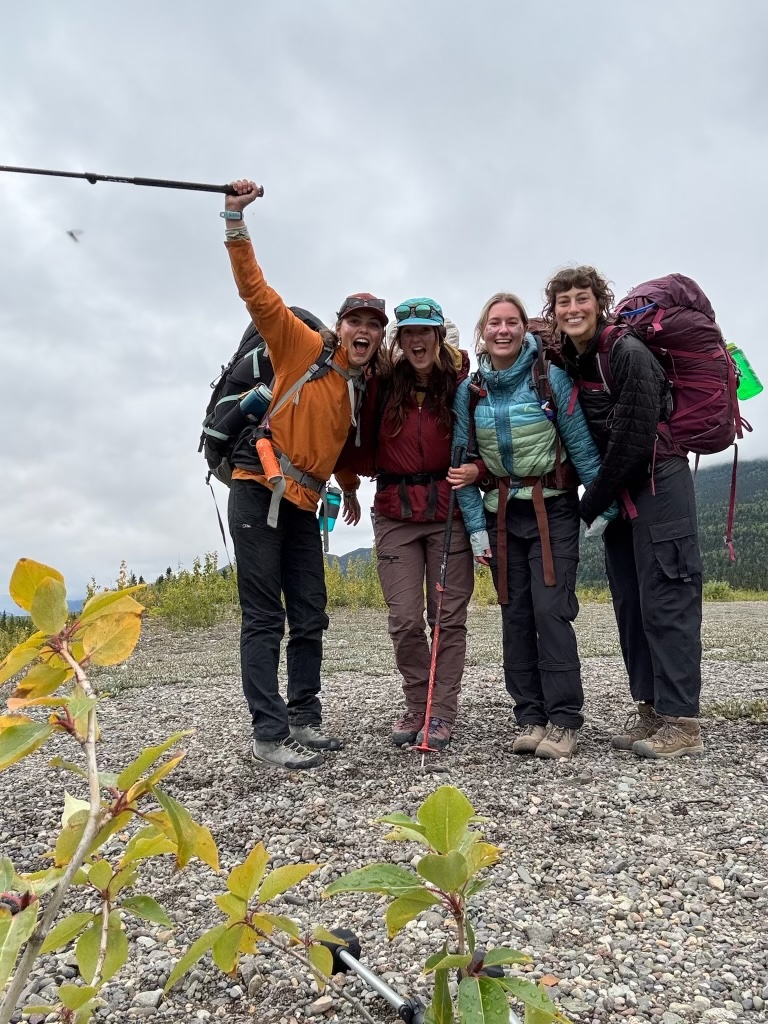
The planned route would take over a few passes before descending onto the Root Glacier near the bottom of the stairway icefall. From there, we had our home stretch, just a few miles down the Root to the Root Glacier Trail, and from there a quick hike and a ride on the shuttle back to McCarthy for dinner at the Potato. All in all, we planned for about 40 miles in 4 days. We’d spoken with a trusted (if notoriously sandbag-y) advisor who’d done the route two summers previously.
“It’s really not that hard!” and “It’s only about 20 minutes of bushwhacking total at the beginning!” were his words of encouragement as he helped us map out our path. While other guides and community members had backpacked in the area more recently, nobody we were able to find had completed the exact route for the past two summers. We made our first mistake by deciding to forego emergency food– fast and light was the name of the game.
Day 1:
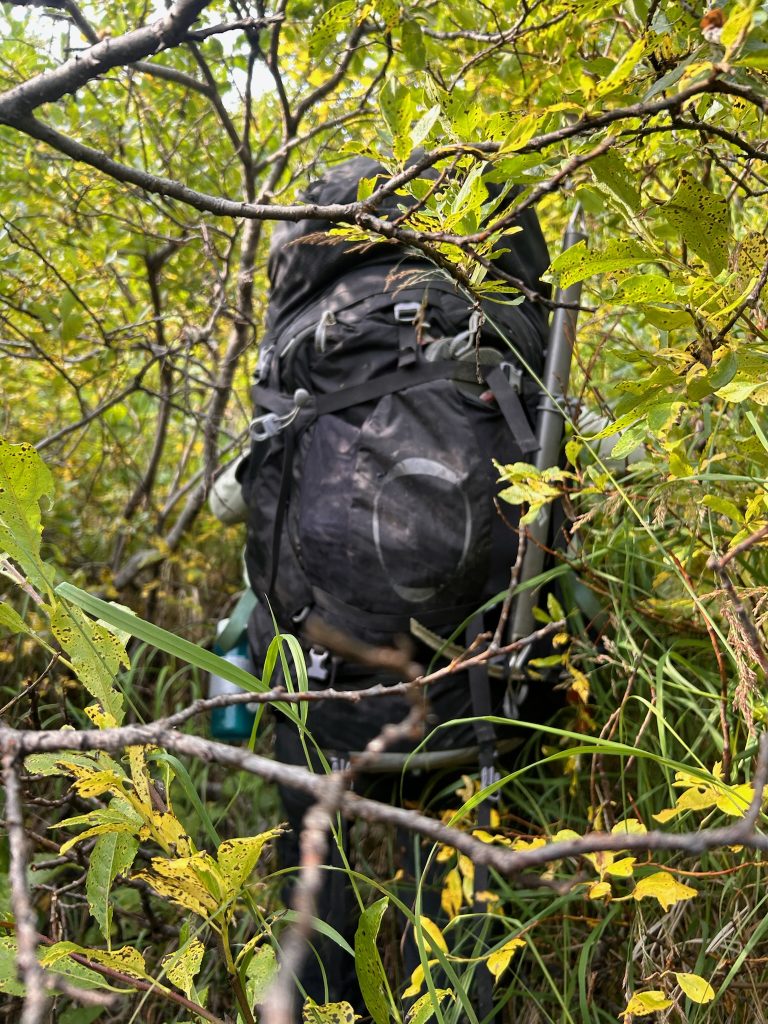
Our first day began with a beautiful if short lived hike along Nizina lake before it became clear that “20 minutes of schwacking” might have been a misleading piece of beta. True, the actual time spent neck deep in willows and alders was only about 45 minutes. However we were delayed by The Rock Incident, in which an entire face of Wrangell choss gave way underneath me while I tried to climb it in pursuit of the bear trail we were meant to be following. Lesson 1: Always move friends away from the rock fall zone when scrambling up Wrangell Choss. Lesson 2: Following bear trails might make schwacking easier, but it should be noted that bears can more easily scale rock than humans with backpacks. Follow them with a grain of salt. Lesson 3: If the trail veers straight up, it is probably a goat trail, not a bear trail. Abandon it. We recovered our wits and packs, found a new place to climb utilizing the tried and true “veggie belay,” and continued on through the rest of the schwack. On our maps, this portion of dense vegetation between Nizina Lake and the high country we aimed to reach has been labeled “Satan’s Bush,” due to both the frustration and swearing incurred in our efforts. We were rewarded with spectacular views of the Nizina glacier and wild blueberries.
We did eventually find the high tundra, as well as the bear who had kindly cleared the in-and-out trail we’d been following all day. We trekked through the tundra until we found a camp with water and called it a day. Although we’d only gone about six miles, we knew we’d started late with a 10 am drop off and some dilly dallying and we’d anticipated that bushwhacking would reduce our mileage capabilities significantly. We were optimistic about covering more ground the following day and tucked into bed just as the rain began.
Day 2:
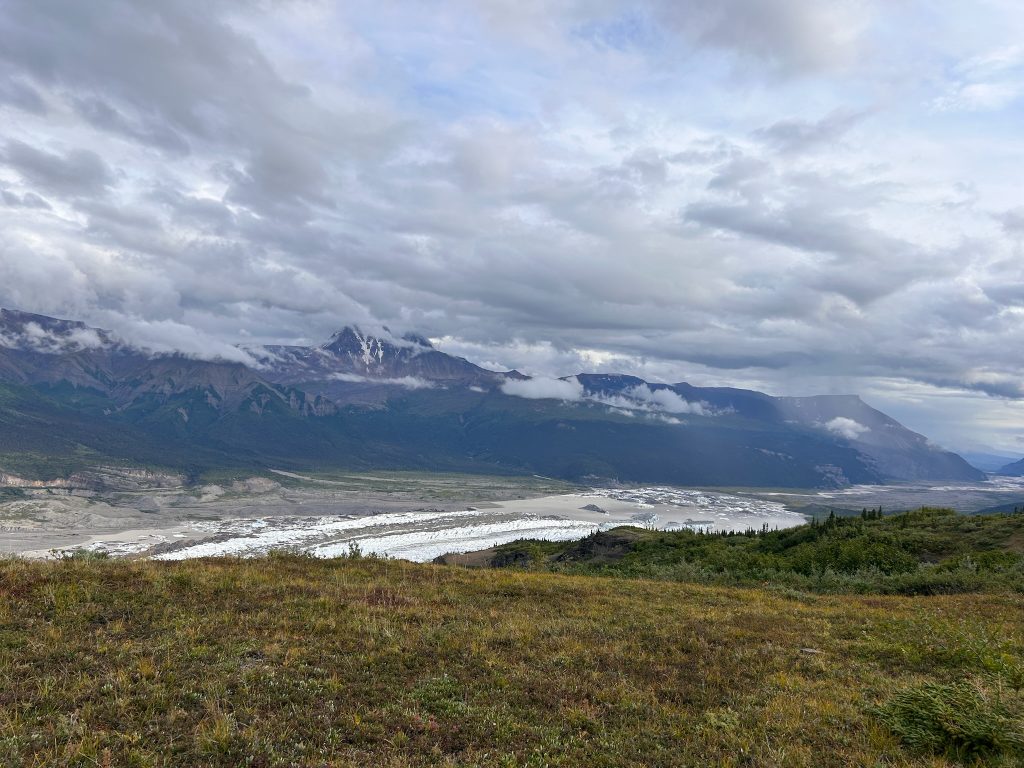
Fog, fog, fog. And sleet, hail, rain, snow, and wind. Day two was a slog of epic proportions through weather that tested our boots and our positive attitudes. At the end of the day, both were thoroughly soaked. While this section of our journey might have been characterized by sweeping views of the Regal glacier, we found we could rarely see more than 100 feet in any direction. This made locating the pass we were meant to climb and planning a route over it challenging, and these difficulties were compounded by steep snowfields. Lesson 4: Learn to self arrest before attempting to cross steep snowfields, otherwise you may very well find yourself (at best) climbing the field twice. While we were cold, wet, and making slow progress as we constantly had to stop, pull out maps, and re-orient ourselves, we were pleasantly surprised by a herd of goats that appeared, disappeared, and reappeared through the fog for about an hour, as well as innumerable crystals and agates sparkling out of the rock under our feet. Waterfalls cascaded down from the remnants of hanging glaciers, alpine lakes were strikingly turquoise in the dim lighting, and every once in awhile, for no more than five minutes at a time, a cloud bank would lift and reveal glimpses of the Regal glacier below us. We did eventually locate our pass after some time spent playing floor is lava through thixotropic mud, and descended into camp overlooking the West Fork glacier late in the evening. At this point, spirits were low. There was a lost tampon incident, a bout of stomach troubles, and the obvious lack of dry clothing and gear, not to mention that we hadn’t covered the ground we’d hoped to. But the weather was clearing as we crawled into tents and we remained optimistic that we could make up time once we reached the Root Glacier on our last day, given that for Amelia and I, this was home turf.
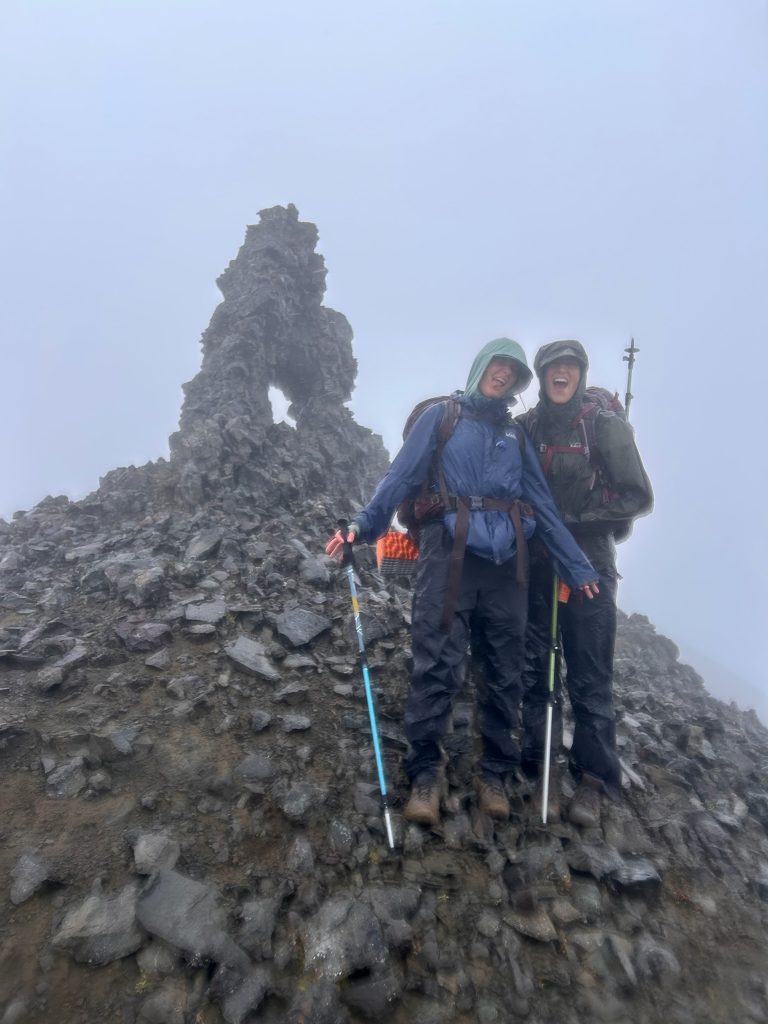
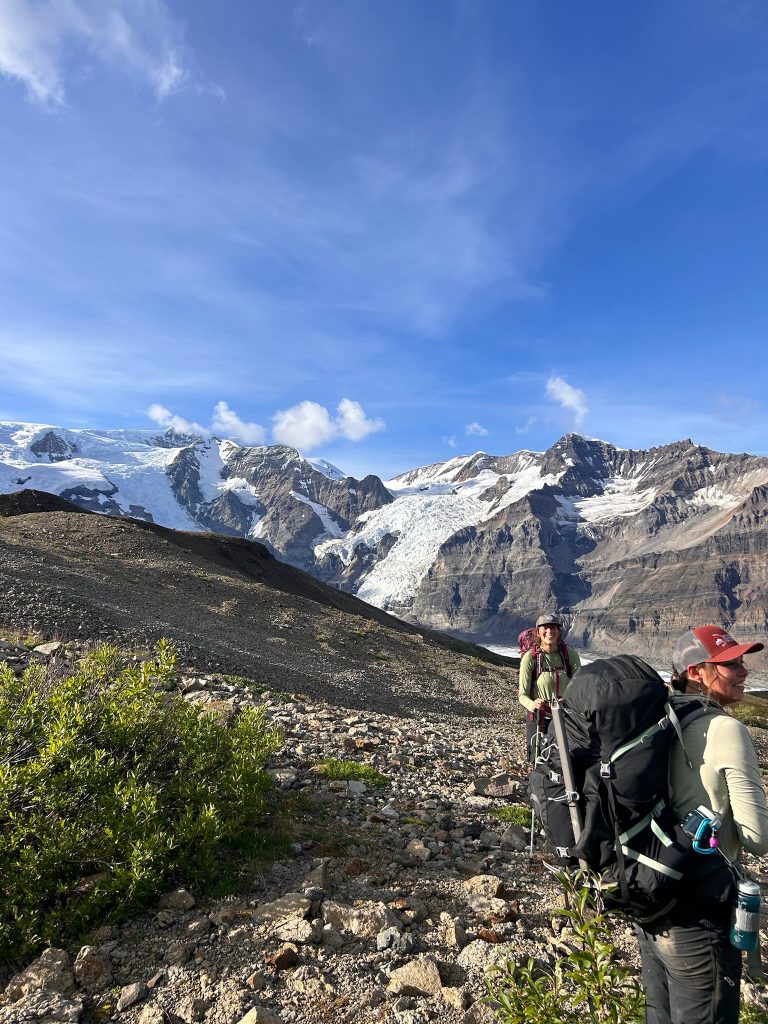
I should mention that at this point our Salt Lake Ladies were seriously questioning their decision to come backpacking. In our tent, Amelia and I discussed whether or not they’d still like to be friends with us at the end of the trip, or if they’d ever come backpacking with us again. I’m happy to report that after a few months of contemplating these questions, we are not only still friends but our girls let us know that they’re excited to get back out there. If you don’t find yourself having some type two fun, you aren’t in the Wrangells!
Day 3:
Our beta for the day included pins marked “5 small below the knee creek crossings” and “awesome gully.” We were optimistic to find the rain had stopped and the mist was slowly burning off as we began our descent to the allegedly “chill” creek experience. Privately, Amelia and I discussed a timeline for the day, hoping to cover some serious ground in good weather. Unfortunately, the creek was engorged following the recent rain. Our crossings became thigh to waist deep endeavors, where we practiced the pyramid method of fording taught in swiftwater classes and SEAG guide training alike. Boy were we glad for our trekking poles! Lesson 5: Scout every crossing carefully. Take your time picking the best possible option. Remember that creeks can change quickly and water is always more powerful than you think!
After emerging from the creek, crossing the West Fork glacier was dreamy: the sun was hot, our clothes and gear dried, and the icefall feeding the glacier was spectacular. Lesson 6: Alaska challenges, but Alaska also rewards. The beauty of this place is truly remarkable.
We’ve renamed our route up from the West Fork Glacier to the high plateau above it “Bend me over Gully,” which I think nicely summarizes our experience there. There was some hands and knees action, and I caught some flack for shouting “Keep going, it turns into a sweet little staircase at the top” as a means to encourage our courageous gals through the final stretch. There was no sweet little staircase. Furthermore, Amelia and I were growing increasingly stressed about our timing. At 5 pm, we had only gone about ⅔ of the distance we hoped to cover for the day, and we were about to embark on our biggest up and over yet. While we could’ve camped before the pass, doing so would destroy any and all hope of getting back to McCarthy at the planned time. We had about 5 hours of daylight left and we decided to lock in. Up and over it was. It was at this point that Washburn and Bates came to mind– our little backpacking trip had truly begun to feel like an escape from Nizina.
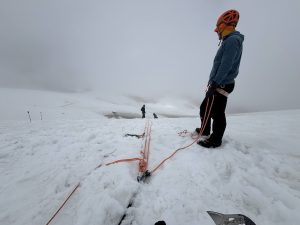
The following section of tundra passed without incident: stunning views, a few quick stops for string cheese and glitter re-application, ptarmigan startling out of the grass, and the joy that comes when one is finally dry after experiencing a period of intense wet. Finally, we laid eyes on our most ambitious pass yet. Covered by a snowy glacier that was previously described to us as “flat as a pancake,” our route yawned before us as both stunning and daunting. Most worrisome was the bergschrund we could see smiling at us from the top. With no other options shy of turning around, we began our climb.
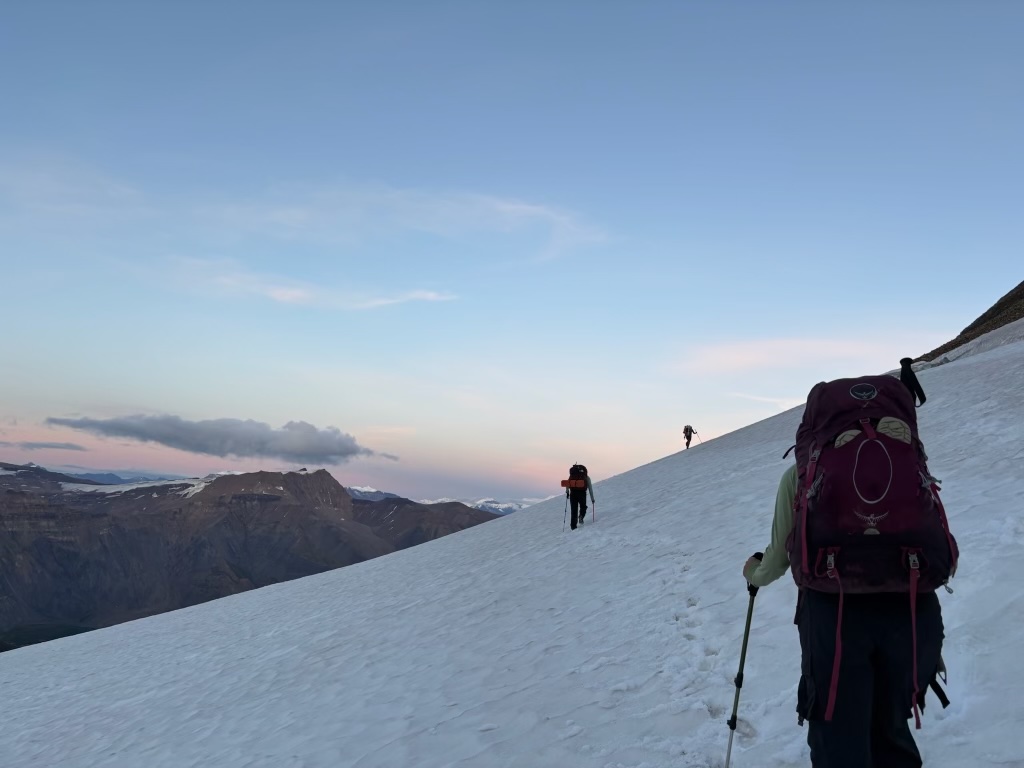
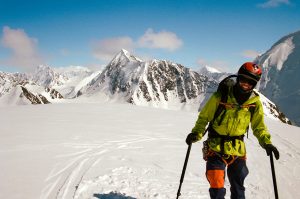
If you’ve ever found yourself high up on a snowy glacier at sunset, you’ll understand me when I say it is magnificent. Looking behind us we could see the entirety of our days’ route, backed by a full view of the University range. Huge towering peaks were turning pink and orange and purple and blue and time was suspended as light played tricks on our little human minds trying to comprehend the enormity of the landscape. Amelia and I were whooping and shouting as we kicked steps into the snow for our girls to follow, laughing and crying felt equally appropriate in response to the beauty laid out before us and the adrenaline fueled by the crux of the pass ahead. When I think about every moment of awe I’ve experienced exploring the Wrangells, it’s this one, this view, this feeling, this place, that stands out to me as the most profound. Perhaps only fitting, given the drama that followed.
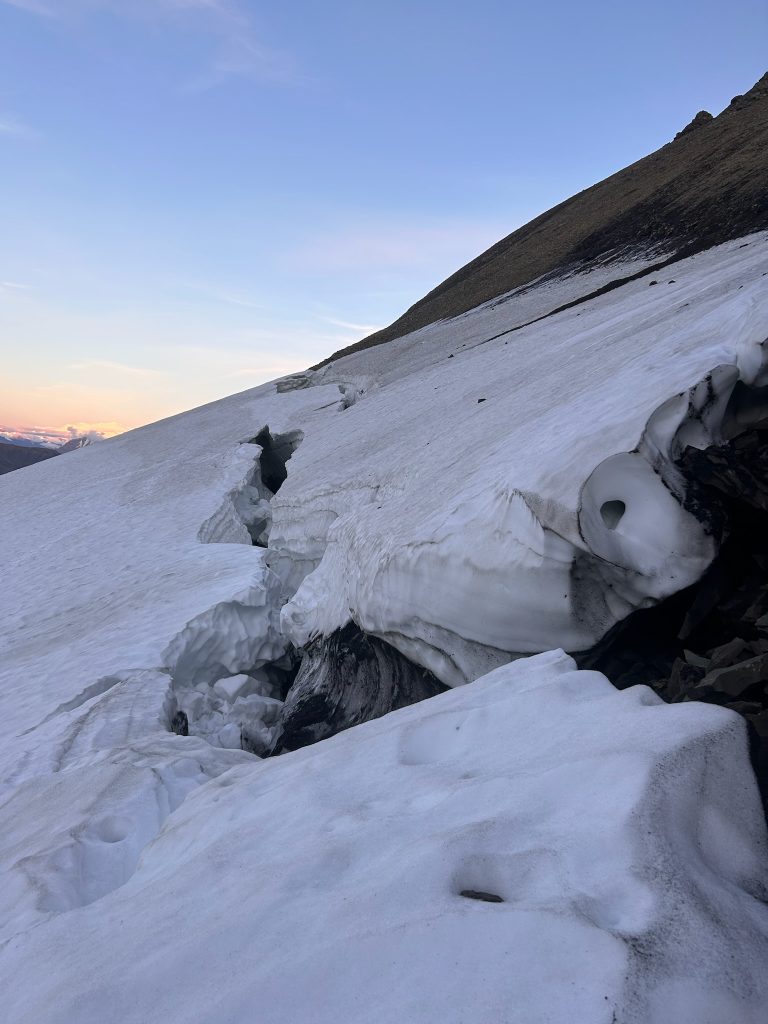
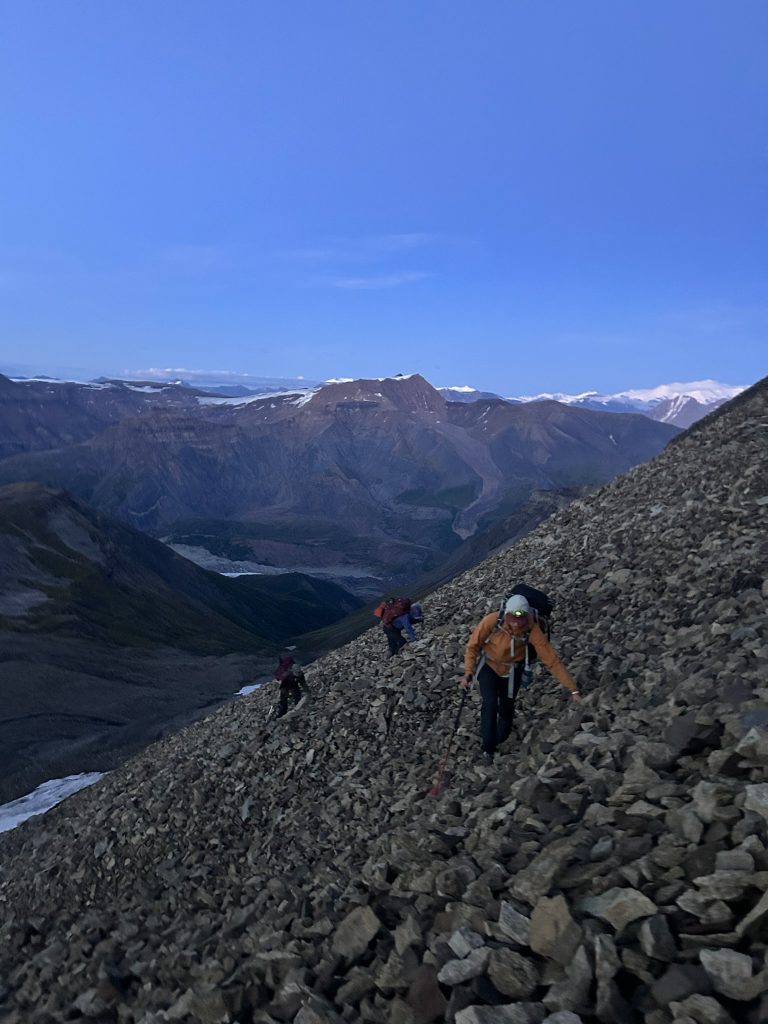
The Bergschrund was not supposed to exist. If it did exist, it was not supposed to be notable or noticeable. If it was noticeable, it was not supposed to be big. But there it was, laughing at us from the depths of its dark belly. We had to cross it. Lesson 7: When crossing a Bergschrund, do it with a rope. Lesson 8: If you do not have a rope, thoroughly examine every possible option before attempting to cross a bergschrund. Lesson 9: Remember your earlier lessons about the unpredictability of Wrangell Choss. Crossing a schrund by means of choss on the edge is not recommended. Lesson 10: If you’re going to cross a snow bridge without a rope, fast and light is still the name of the game. Lesson 11: If you’re prone to peeing in scary situations, consider peeing before crossing a snowbridge without a rope. Lesson 12: If you’re headed into a scary situation, glitter up and hold it together. A little cry on the far side is acceptable. Lesson 13: When crossing a bergschrund, always do it with a rope. After several hours spent learning these lessons, we reached the top of the pass at 10:06 pm. It was just after the sun had set and just in time to see a missile launch from the mountains far ahead of us and begin curving a perfect line to where we stood.
The Missile Incident now lives in infamy among the four of us gals as the true cherry on top of a terrifying evening. It wasn’t until days later upon returning to McCarthy that we learned of missile testing out of Fairbanks that likely explained the unidentified flying and seemingly hostile object that blazed a trail through the darkening sky. We hypothesized about the likelihood of an attack from Russia being aimed at the middle of the Wrangells, and about the size possibilities of a flare from a downed aircraft, and ultimately we decided to “get the **** off that ridge.”
Unlike Washburn and Bates, we possess a video of that dialogue which has been passed around friends and family resulting in great hilarity.
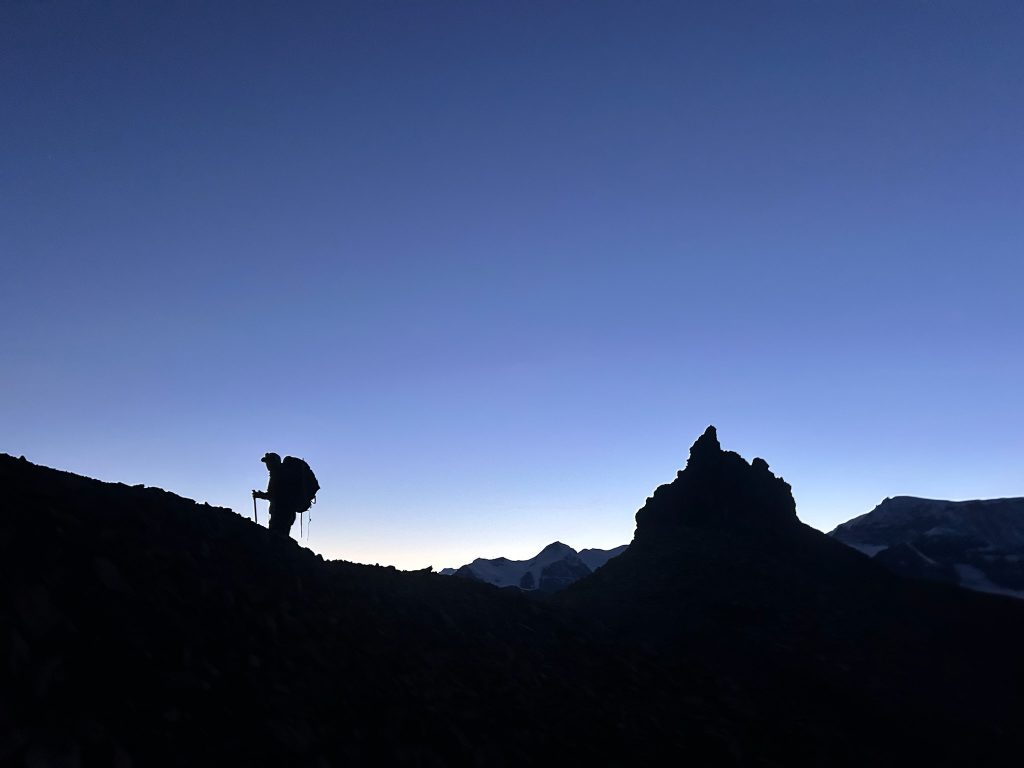
The top of a knife edge ridge is not an opportune place to camp, so to finish our third day we spent another several hours descending the backside of the pass in the dark. Having bravely taken the lead on the bergschrund crossing, Amelia hung back and I tapped into my reserve energy and the following days’ supply of string cheese to pick a course to a rocky campground overlooking what was described to us days earlier as “an epic waterslide” and was in fact a steep slab waterfall with steep walls on either side, and which we were not eager to navigate around in the dark. Day 3 was complete and the home stretch was in sight. Tomorrow night we’d be eating dinner at The Potato.
Day 4:
5:30 am: Sun shining, peaks sharp, back in the realm of things named “McCarthy,” spirits high, oatmeal tasty, packs light. Four gals get an early start to the day, motivated by the promise of cold beer and good food before the sun sets.
Noon: The four gals have crossed McCarthy creek, oohed and ahhed at McCarthy Creek Glacier, and are on track to catch the last shuttle from Kennicott back to McCarthy at 7.
2:00 pm: Summit of the pass! The stairway icefall is so close it feels as though you could touch it. It’s straight downhill to the Root Glacier, and rumour has it glissading will be an option to slide right down the backside of the pass!
3:00 pm: Glissading is not an option. Instead, cow parsnip dominates a steep descent. The ladies quickly change their tune from laughter to curses as they repeatedly fall on their backsides into mountains of the rash-inducing weeds. Not the kind of sliding they were hoping for.
4:00 pm: Snow is finally sighted in the gully approaching the glacier. It does not connect solidly with the ground, rather a gaping snow cave is revealed where a creek enters from above and disappears downhill under what is evidently a deceptively thin layer of snow.
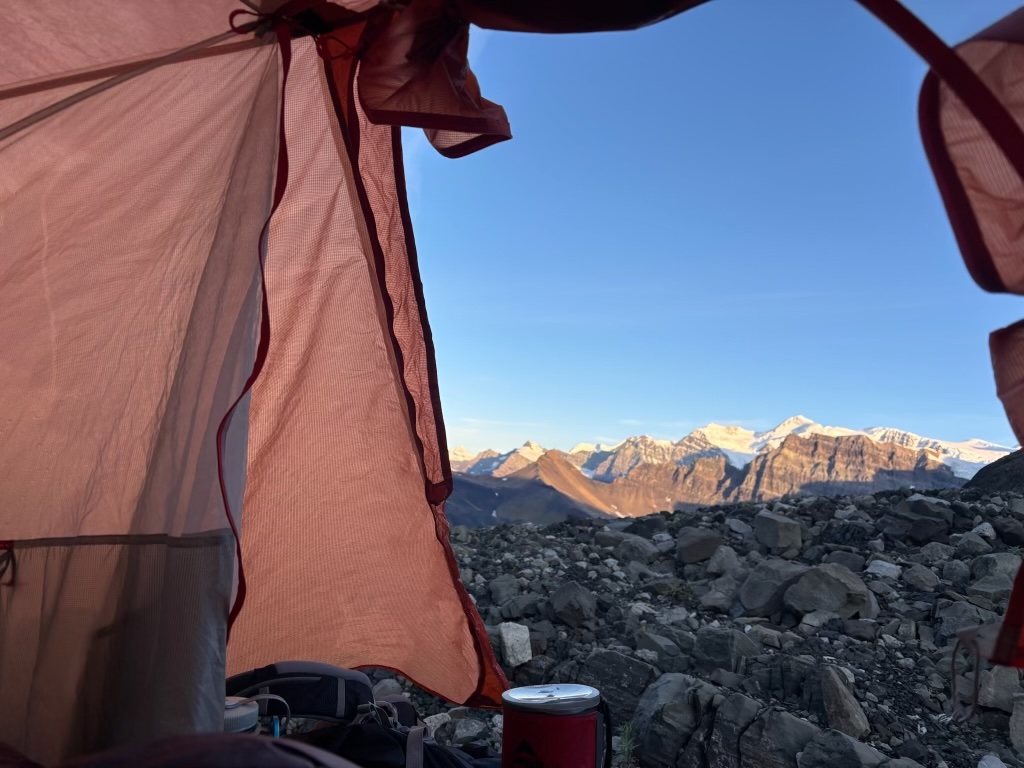
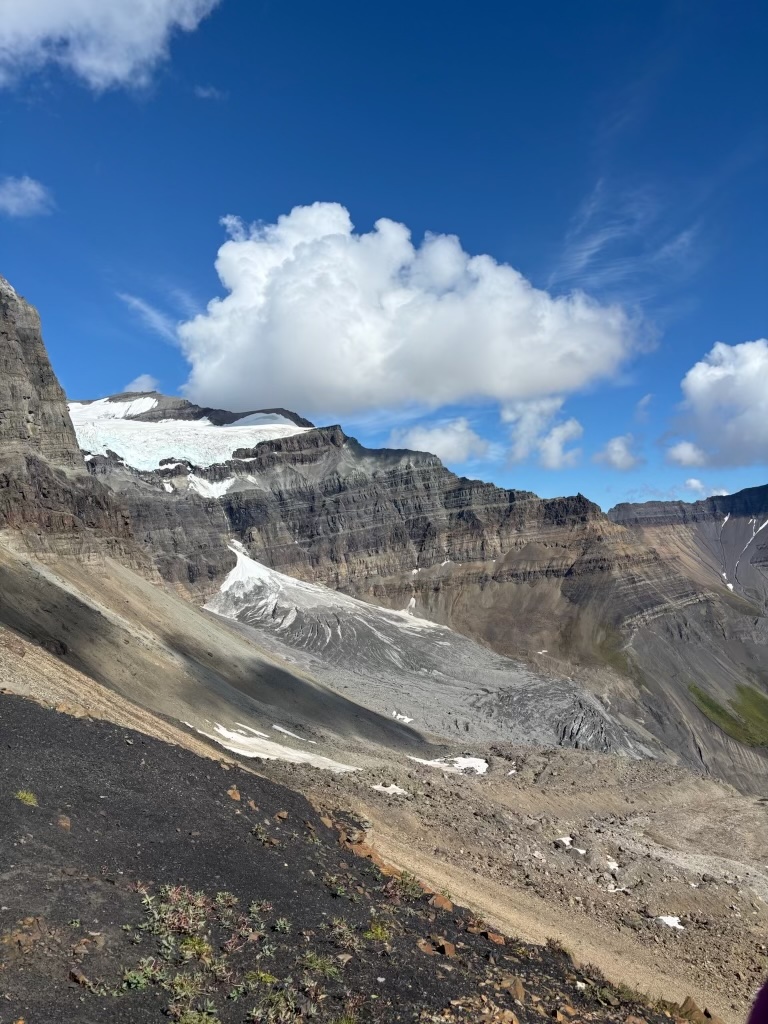
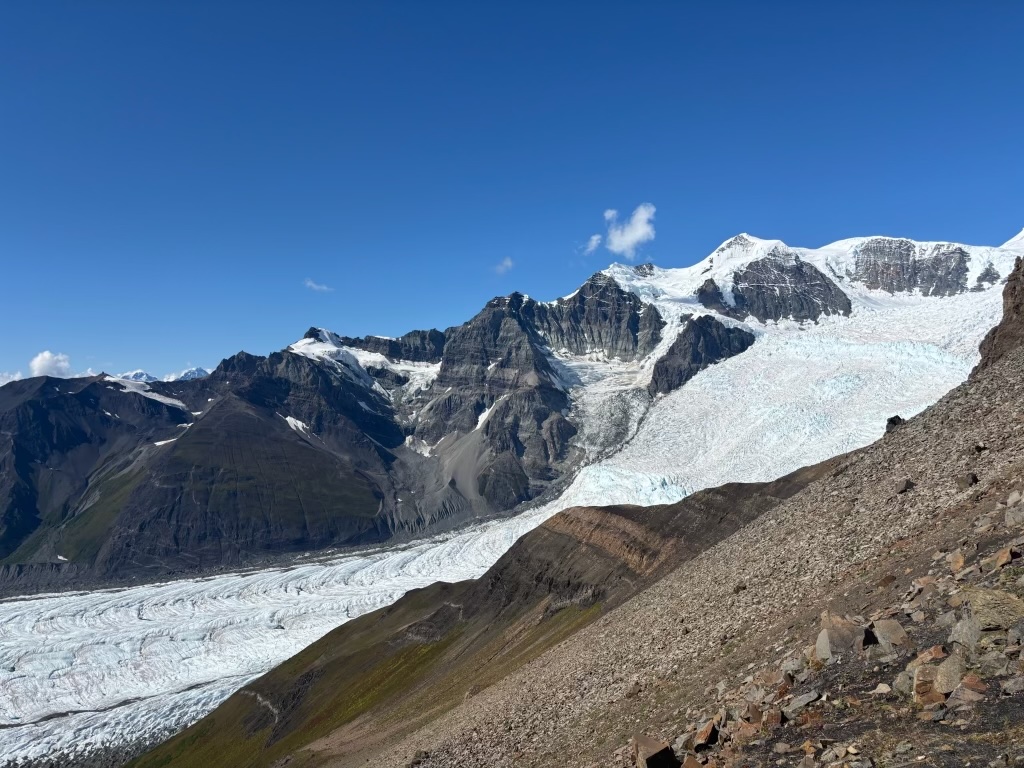
4:30: The girls are climbing again, this time to get high enough to avoid walking on top of the old snow cave. The sidehilling begins in earnest. One trusty boot gives out on the side.
5:00: On the Root Glacier at last! As the crow flies it should only be about 5 miles to the Root Glacier Trail. Several crashouts are experienced as guides Stella and Amelia recall that glacier travel is never, never as straightforward as the crow flies. It’s decided that when phone service kicks in, a coworker can be trusted to pick up food for the girls from The Potato before it closes. There’s a 9:00 O’clock shuttle. A message is sent to SEAG owner Anya not to worry about the late arrival home, everyone is safe.
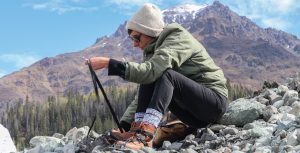
6:00 pm: It becomes clear that four days of intense backcountry travel have taken their toll on the two visitors. Two boots have now completely given out, two stripey wet socks are visible under crampons. Two women who have demonstrated adaptability, positivity, willingness for unexpected adventures, and trust in their friends all at the highest level have had enough. Two other women who have perhaps misjudged the ability of any individual to go from zero to hero in one long weekend of backpacking as well as the trials of the route they’d planned and importantly at this point the necessity or lack thereof of an emergency food supply begin to take stock.
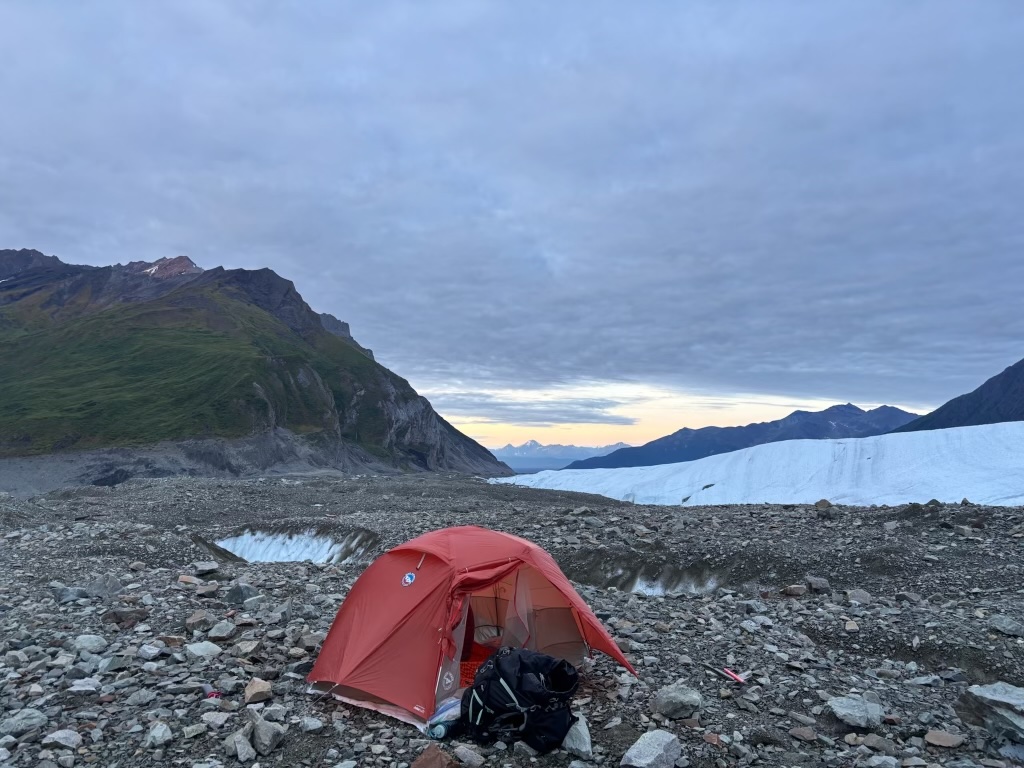
7:00 pm: Near Erie Lake. Several pairs of feet are too battered and blistered to walk even to the edge of the glacier. Camp is made on the ice, tents perched on small patches of rock between crevasses. A message is sent to Anya explaining that while everyone is safe, the four women will not be returning on time.
7:30 pm: A can of bear spray hits a rock and explodes in our tent vestibule. This sets off a string of uncomfortable events, now collectively referred to as “The Bear Spray Incident.”
8:00 pm: I eat my last piece of string cheese. We are benighted on the Root Glacier.
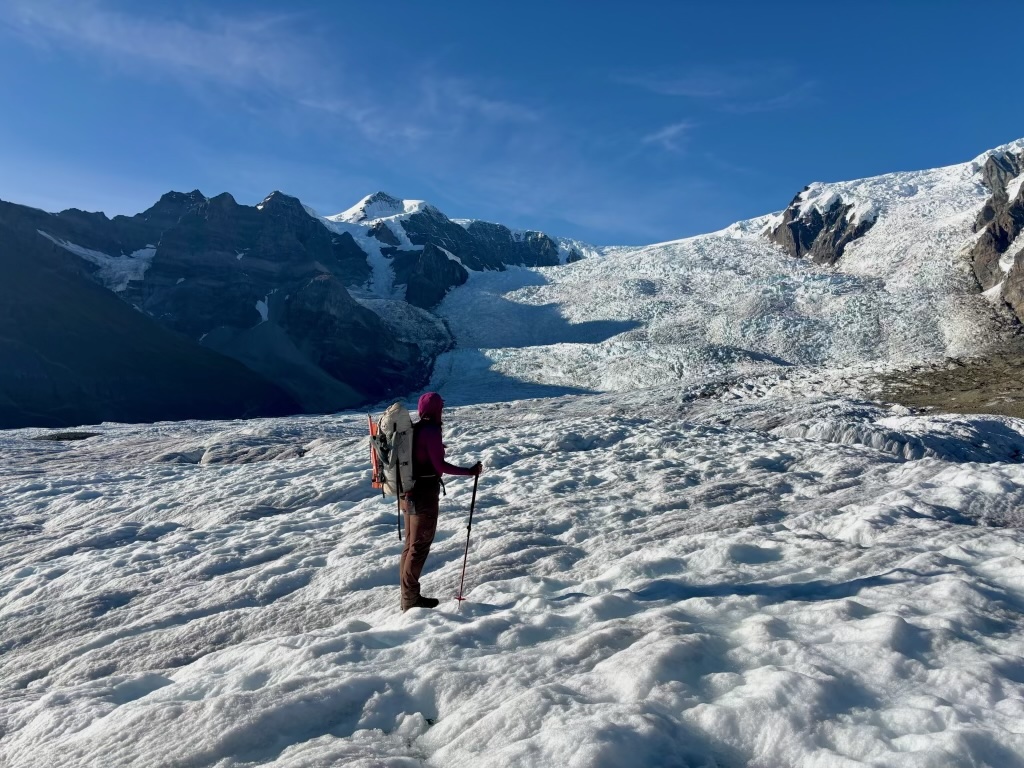
Lesson 13: If you should ever find yourself benighted on the Root Glacier without phone service and unable to exit the backcountry on your designated and planned date, let your parents know you are safe. It is worth the satellite message. If you fail to do so, they will panic.
Day 5! Oops!
We got up early, not knowing how long it might take our battered companions to limp through the last leg of the trip. True to themselves and indicative of their good nature and impressive fortitude, the Salt Lakers were up and at ‘em with more leuko tape on their feet than skin. We got back to phone service around 10 am, at which point I received a flurry of messages, emails, and missed phone calls from my concerned parents. Lesson 13 is a good one to learn. I alerted Anya that I unfortunately would not be able to make my 1:00 pm Mill Tour and was thankful to have a coworker step in to cover and for the grace given by SEAG in the name of the pursuit of a good adventure. Hungry, sleepy, elated, and somewhat delirious, we crossed paths with the first glacier hikes of the day as we exited the Root Glacier, dragged ourselves back into town, onto the shuttle, and to the Potato for the long awaited Potatohead Burrito and ice cold beer around 3:00 pm. We had escaped from Nizina.
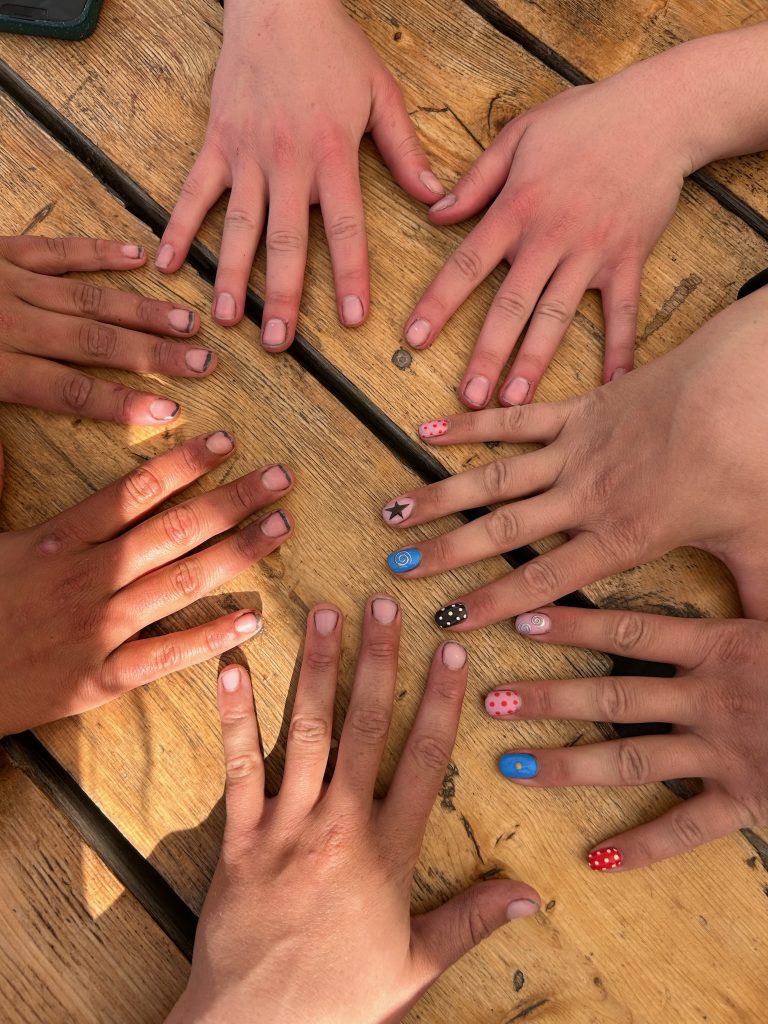
Our Salt Lake Warriors got in the car that very afternoon, drove back to Anchorage, and boarded their flight home just in time. Amelia spent the evening and the following day packing her bags before guiding a Glacier and Tundra two days later. I had the luxury of a brief period of reflection before heading out on my own Bergs to Beaches trip later that week. But after a backpacking epic in the Wrangells, the period of reflection never really ends. As winter rolls in, the West Fork Glacier looms behind my eyelids when I blink without warning. The University range is still pink, my big toes still lack feeling and Amelia and I double over in giggles when someone brings up the missile. I scour CalTopo for trip ideas, and when we meet up with our girls, we brainstorm ideas for next summer.
Perhaps in some ways, we will never escape Nizina.