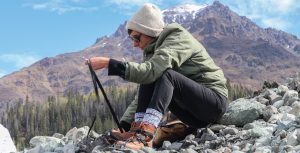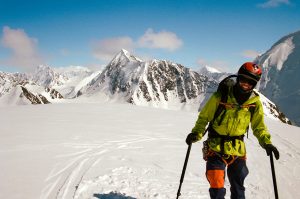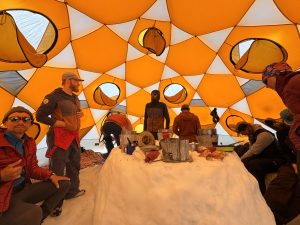

After more than 40 years of guiding trips in the Wrangells, we’ve learned exactly what works (and what absolutely doesn’t) when it comes to boots in Alaska. We’re here to save you from painful lessons learned the hard way—so you can focus on glaciers, mountains, and the kind of scenery that makes your jaw drop instead of your ankles scream.
Below is our expert advice on what to wear on your feet for backcountry hiking and backpacking in the Wrangells.

What Footwear Is Best for Hiking and Backpacking in Alaska?
A No-Nonsense Guide from 40+ Years in the Wrangells
What Kind of Boots Do You Need for Backpacking in Alaska?
Short answer:
Over-the-ankle, waterproof hiking boots. No exceptions.
Yes, we know.
“But I always backpack in trail runners!”
So do we—in the Lower 48. On trails. With predictable terrain. Alaska is… not that.
Why Trail Runners Don’t Work in the Wrangells
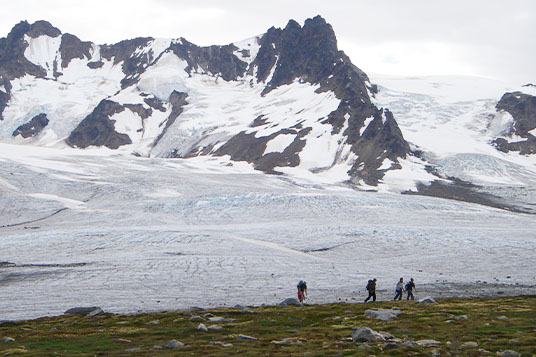
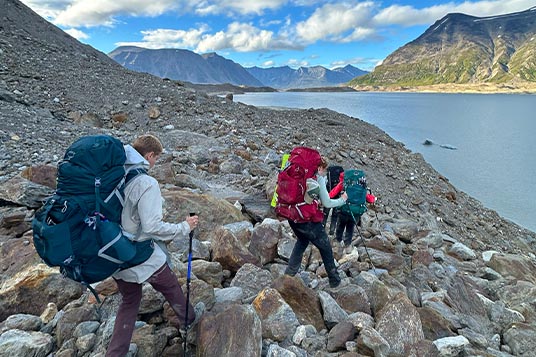
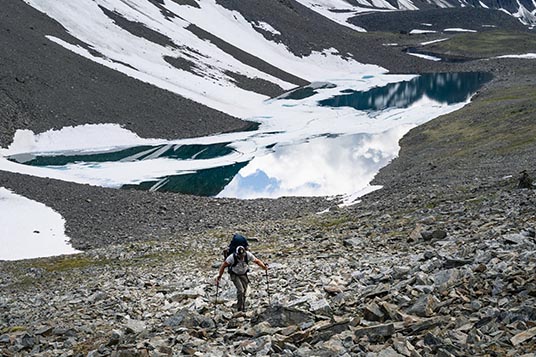
There are no trails where you’re going in Wrangell–St. Elias. None. What you will find instead is terrain that is:
-
Constantly uneven
-
Often steep
-
Sometimes moving under your feet
-
Always demanding your full attention
Now add:
-
A 40–55 lb backpack
-
Jaw-dropping scenery you can’t stop staring at
-
Long days on your feet, day after day
That’s a recipe for rolled ankles, sore knees, and unhappy hips—unless your footwear is up to the task.
What “Uneven Terrain” Really Means in Alaska
This is the part people underestimate the most.
The Wrangells are a nonstop mix of:
-
Round river rocks
-
Jagged alpine talus
-
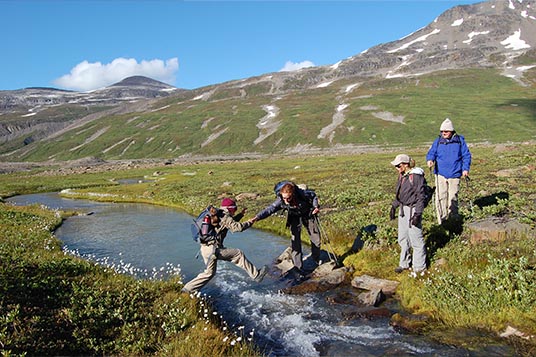
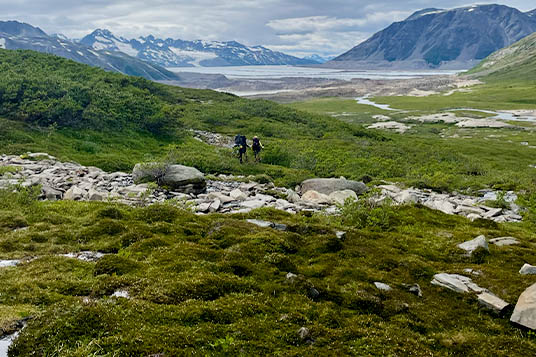
Thick, squishy tundra (think walking on deep sand)
-
Mud that tries to steal your boots
-
Dense brush and swampy lowlands
-
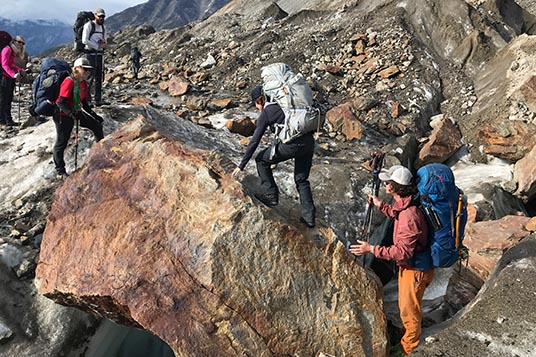
Rivers, snowfields, and glacial ice
We joke that the flattest ground you’ll see is where you pitch your tent. Everything else undulates, tilts, rolls, or slides just enough to keep your stabilizing muscles firing all day long.
If you’re used to sidewalks, gym floors, or well-maintained trails, those stabilizer muscles don’t get much practice. Unsupported footwear forces them into overtime—and that’s how foot, ankle, knee, and hip pain show up fast.
Why Ankle Support Matters When Backpacking in Alaska
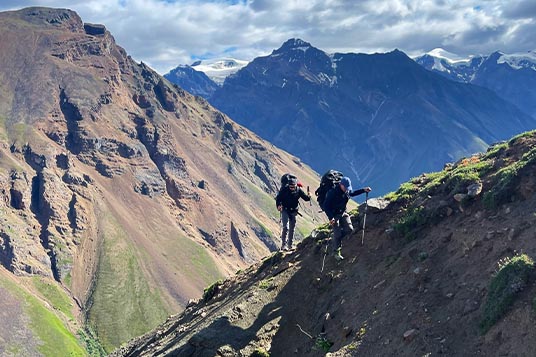
Supportive boots:
-
Reduce ankle roll risk on unstable terrain
-
Improve balance under a heavy pack
-
Protect joints over long, rugged days
-
Help prevent injuries that are much harder to deal with in remote Alaska
Remember: you’ll be hundreds of miles from civilization. A sprained ankle or trench foot isn’t just uncomfortable—it can turn a dream trip into a logistical nightmare.
Do Hiking Boots Need to Be Waterproof in Alaska?
Absolutely. Non-negotiable.
Alaska’s weather is famously unpredictable, and moisture management is everything. Your boots should be:
-
Fully waterproof
-
Well-sealed at the seams
-
Reconditioned if they’re older
We’re big fans of Nikwax products
for restoring waterproofing—not just for boots, but also jackets, gloves, and tent flies.
Dry feet = warm feet = happy brain.
Our Favorite Backpacking Boots for Alaska
These are tried-and-true options we trust in Wrangell–St. Elias:
Scarpa Zodiac Tech GTX
Most of our guides wear these. They’re:
-
Extremely supportive
-
Durable enough for Alaskan terrain
-
A great balance of comfort and toughness
They may be overkill for most Lower-48 trips, but for Alaska? They shine.
Salomon Quest Series
These boots have been around for a reason:
-
Rugged
-
Reliable
-
Supportive
-
Popular both in Alaska and beyond
Pro Tips from the Field
Break your boots in before Alaska.
Wear them everywhere—around the house, on errands, on long hikes. Ideally, take them on a multi-day trip before your Alaskan adventure.
Wear your boots on the plane.
If your luggage gets delayed (it happens), we can help with jackets or sleeping bags—but we don’t have a boot rental fleet. Plus, boots on the plane:
-
Save luggage weight
-
Protect your most important gear
-
Make you look cool and mysterious at the airport
Win-win.
Final Word: Don’t Skimp on Your Boots
A heavy-duty, waterproof, over-the-ankle hiking boot is one of the best investments you can make for an Alaska backpacking trip.
Your feet will thank you.
Your knees will thank you.
Your brain—still focused on glaciers instead of pain—will definitely thank you.
If you want help choosing boots or training for rugged Alaska terrain, we’re always happy to share what we know. After four decades out here, we’ve learned a thing or two.

Was this info helpful? Let us know in an email! Check out our other Tech Tips to learn how to prepare for your Alaskan trip!
Updated 2/2026