
ABOUT THE AREA
Wrangell - St. Elias National Park
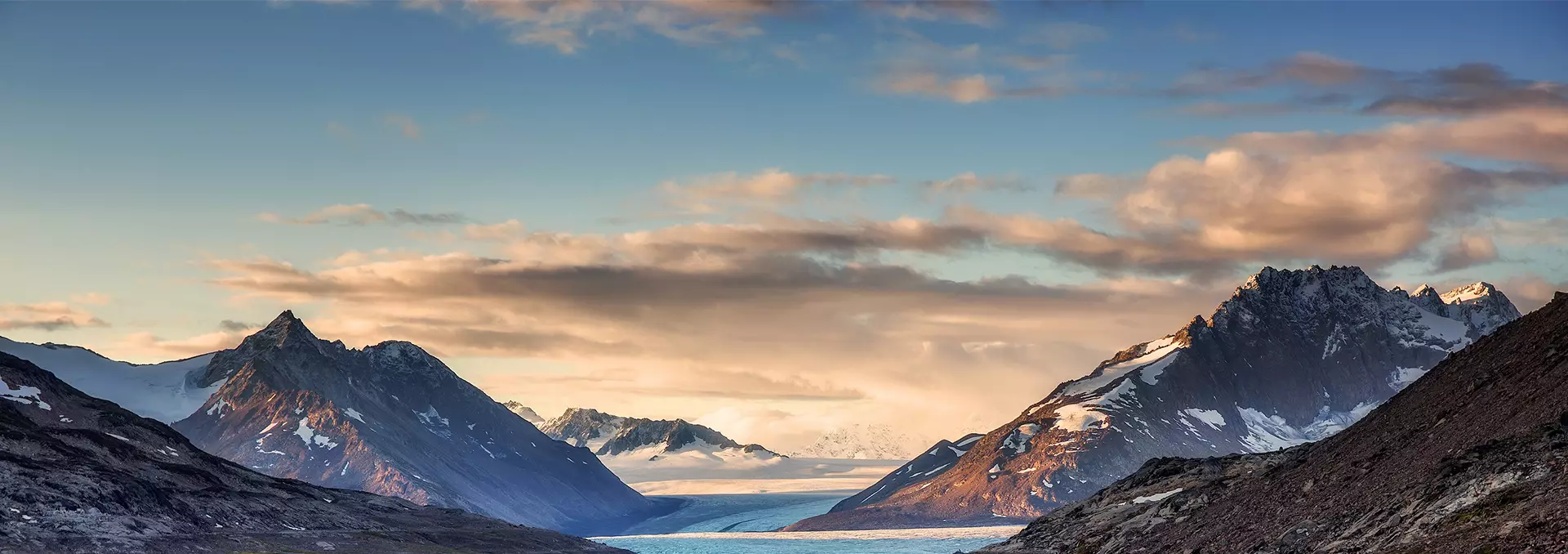
Wrangell–St. Elias National Park is located in eastern South-Central Alaska and is the largest national park in the United States. Spanning more than 20,000 square miles (50,000+ square kilometers), the park is six times the size of Yellowstone and larger than many countries—including Switzerland. This immense wilderness protects one of the most dramatic and least developed mountain landscapes on Earth.
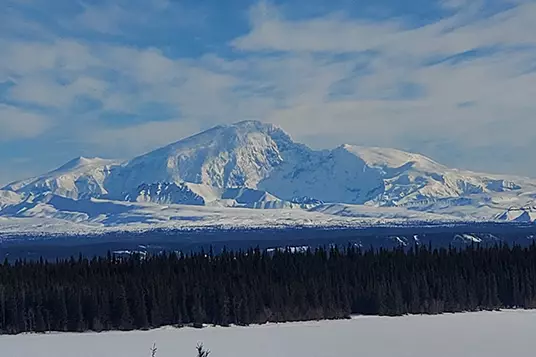
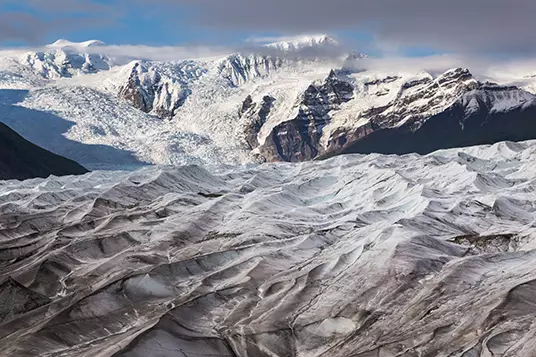
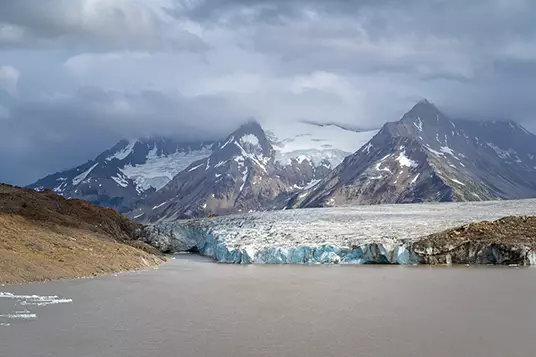
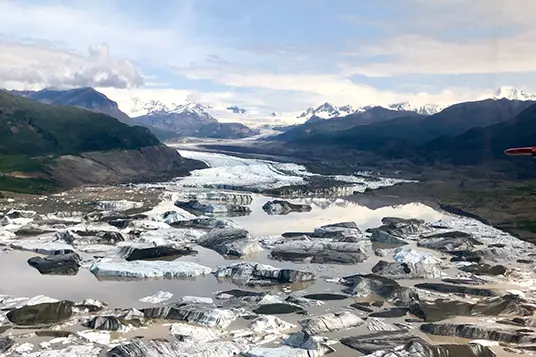
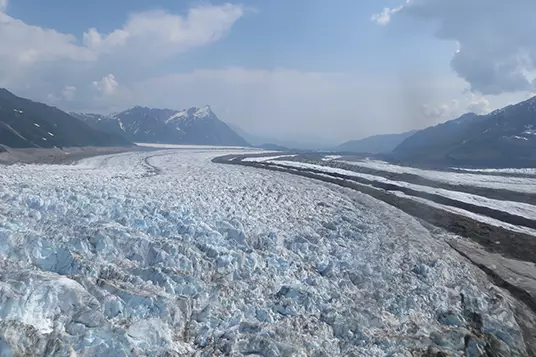
Often called the “Mountain Kingdom of North America,” the park is where four major mountain ranges converge: the Chugach, Wrangell, St. Elias, and Nutzotin Mountains. These ranges include some of the highest coastal peaks on the planet, extreme vertical relief, and an unparalleled concentration of glaciers. In fact, over one-third of the park is covered in glacial ice, making Wrangell–St. Elias a global hotspot for glacier travel, ski mountaineering, and alpine exploration.
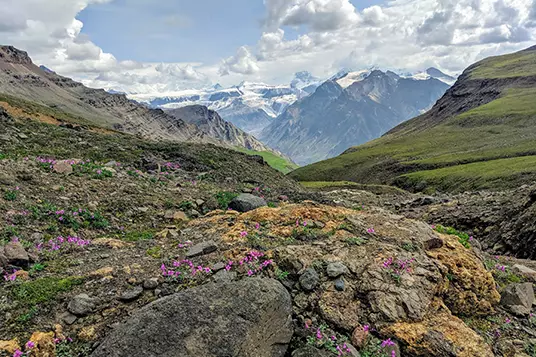
Unlike many national parks, Wrangell–St. Elias remains largely undeveloped. There are few roads, no lodges in the backcountry, and vast areas that see little to no human traffic in a given year. Visitors who venture beyond the road system are rewarded with raw, intact wilderness—towering peaks, massive icefields, braided glacial rivers, and a profound sense of remoteness that is increasingly rare in the modern world.
Gateways into the Park
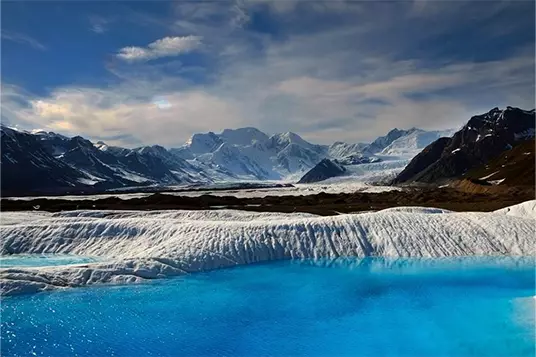
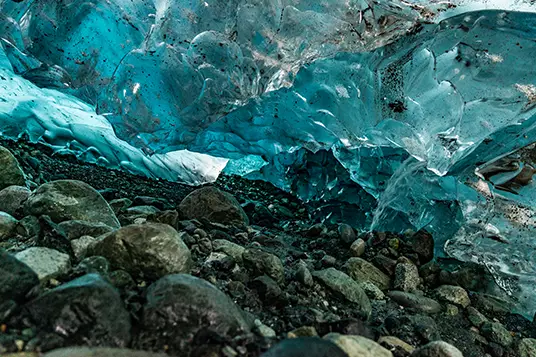
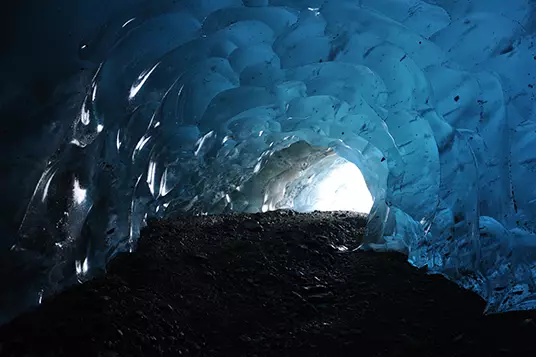
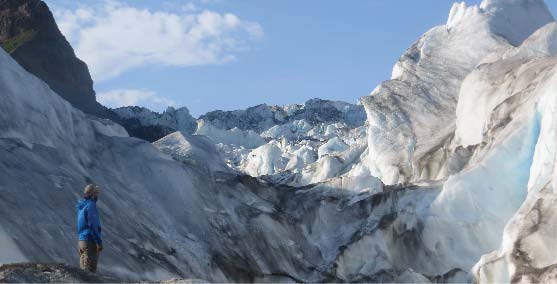
At the heart of the park, at the end of a 60-mile dirt road, lie the historic towns of McCarthy and Kennecott, the primary access point for adventures in the southern Wrangell Mountains and St. Elias Range. From here, hikers can explore maintained trails such as the popular Root Glacier Trail, offering easy access to the brilliant blue ice of the Root Glacier, while climbers, skiers, and mountaineers use the area as a launch point for deeper backcountry objectives.
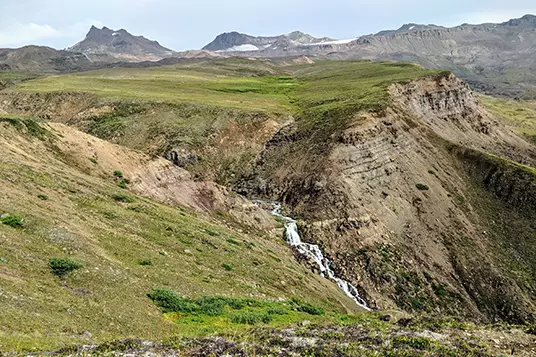
On the northern side of the park, the Nabesna Road provides access to the Nutzotin and Mentasta Mountains. This quieter corner of Wrangell–St. Elias is favored by hikers and hunters seeking solitude and expansive tundra landscapes, with maintained trails leading into remote alpine terrain.
Highlights
- Largest national park in the United States.
- Largest wilderness area in the National Wilderness Preservation System.
- Mt. St. Elias, at 18,008 feet (5.5km), is the second-highest peak in the United States.
- Mt. Wrangell, at 14,163 feet (4,316m), is one of the largest active volcanoes in North America.
- Nine of the 16 highest peaks in the United States.
- Malaspina Glacier, larger than the state of Rhode Island, is the largest non-polar piedmont glacier in North America.
- Nabesna Glacier, at approximately 80 miles (128km), is the longest non-polar valley glacier.
- The Hubbard Glacier is one of the largest and most active tidewater glaciers in North America.
- In 1978, the United Nations recognized Wrangell-St. Elias National Monument in combination with its Yukon neighbor, Kluane National Park, as an international World Heritage site…the first bi-national designation. Glacier Bay National Park in Alaska and Tatshenshini-Alsek Provincial Park in British Columbia were added in 1993. Together, these four units include 24.3 million acres (almost 10 million hectares), one of the largest internationally protected ecosystems on the planet!

McCarthy and Kennecott, Alaska
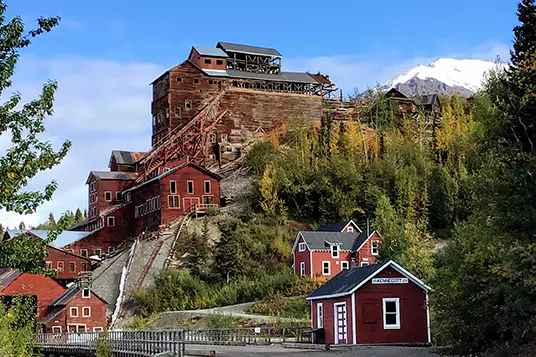
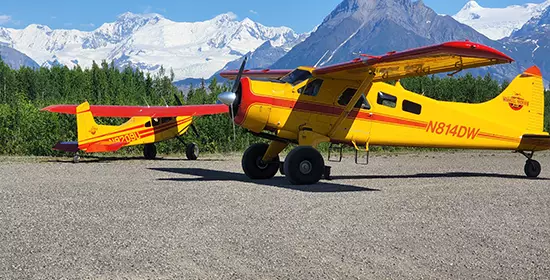
The communities of McCarthy and Kennecott are nestled deep within Wrangell–St. Elias National Park and serve as the cultural and logistical hub for the region. The two towns sit just 4.5 miles apart and are accessed via the 62-mile McCarthy Road from Chitina or by small aircraft—an approach that reinforces the feeling of truly leaving the modern world behind.
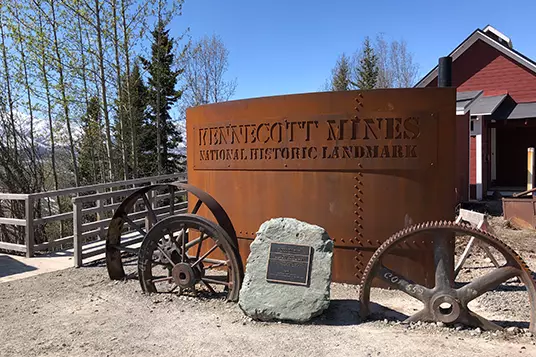
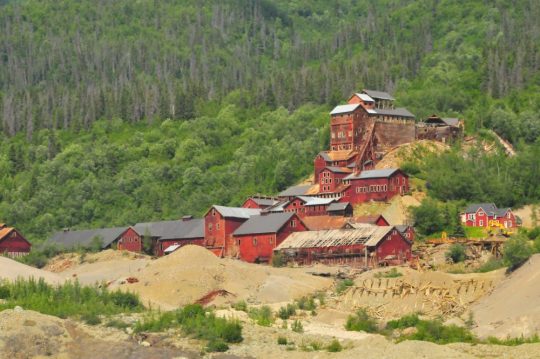
Today, Kennecott is a remarkably preserved National Historic Landmark District, while McCarthy is a living, breathing off-grid Alaskan frontier town. Together, they offer a rare blend of wilderness immersion and rich human history.
A Copper Boomtown at the End of the World
In the early 1900s, prospectors exploring this remote glacial valley discovered what would become the richest copper ore vein ever found. To exploit it, the Kennecott Copper Corporation constructed a 196-mile railroad from the interior to the coast—one of the most ambitious engineering feats of its time. High above the valley floor, the Kennecott mines operated at astonishing productivity for nearly three decades.
Kennecott itself was not a traditional town but a tightly controlled industrial work camp. To support the miners and railroad workers, the town of McCarthy sprang up at the railroad’s end point, quickly developing a reputation as a lively frontier settlement. At its peak, McCarthy boasted hotels, restaurants, saloons, pool halls, shops, and a thriving (if infamous) nightlife that earned it a legendary place in Alaska lore.
McCarthy Today: Off-Grid, Eclectic, and Welcoming
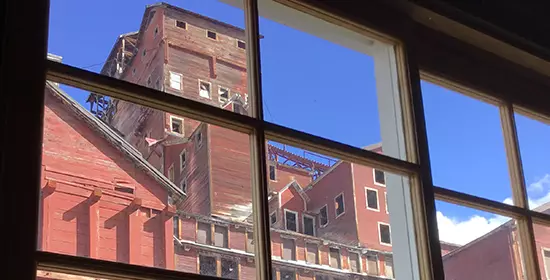
When the mines closed in 1938, Kennecott was abandoned almost overnight, leaving behind the hauntingly beautiful ghost town visitors see today, perched above the Kennicott Glacier. McCarthy, however, endured.
Today, roughly 50 year-round residents call McCarthy home, with the population swelling to several hundred each summer as seasonal workers, guides, and travelers arrive from around the world. Since the 1960s, homesteaders, climbers, artists, and adventurers have been drawn here by the promise of freedom, wilderness, and community. Life in McCarthy remains largely off the grid, powered by creativity, resilience, and a deep connection to place.
Despite its tiny size, McCarthy surprises many visitors with its vibrant social scene. Live music, trivia nights, community events, pickup softball games, and evenings spent at the one bar in town create a welcoming atmosphere where visitors and locals mix easily—proof that even at the end of the road, community thrives.
Why This Area Matters
For travelers researching Alaska adventure travel, national parks, glacier hiking, mountaineering, or backcountry skiing, Wrangell–St. Elias, McCarthy, and Kennecott offer something truly singular:
unmatched scale, authentic wilderness, and a living frontier culture, all anchored by deep history and extraordinary landscapes.
What is there to do in the area
The highlights of our area that set us apart from other areas in Alaska:
- Glaciers
- History
- Backcountry
- Authentic bush community
The #1 activity in the area is our Historic Mill Town Tour! Providing you with context for the rest of your stay, it’s only 2 hrs long and easy to squeeze into any itinerary!
Adventures in the Park
We offer adventure Day Trips staged right out of McCarthy and Kennecott that provide you with access to both the backcountry and the glaciated terrain of this vast wilderness – day trips are the best way to create a multi-sport itinerary!
If you’d like to truly immerse yourself in the wilderness, we recommend you look into our multi-day trip – there’s something for every type of adventurer!
Logistics
How do I get there and where do I stay?
We’re remote, even by Alaskan standards!
Trip planning can be challenging – we understand and we’re here to help! Check out some of the resources we’ve put together to help you plan your trip!
FAQ
The condition of the road varies during the course of the Summer Season (May-September), and travel is not advised during the Winter Months (November-April). If you do choose to drive down the McCarthy Road in the Summer you should keep the following in mind:
It is a 60-mile gravel road.
There are many potholes and frost heaves along the way.
There are narrow sections of road and soft shoulders.
Sharp rocks and old railroad spikes can cause flat tires, you should always travel with a spare.
Landslides have been known to occur on certain sections of the road, blocking progress.
Travel is slow going, and you shouldn’t go any more than ~35 miles per hour.
Always allot more time to travel the road than you think you need, we recommend 2-3 hours from Chitina (where the road begins) to McCarthy.
If you have questions about alternative transportation options in and out of the McCarthy/Kennecott Area, you can refer to our Transportation Page.
There is no public WiFi in the area. We highly recommend that you enjoy the chance to unplug, unwind, and explore the beautiful Kennicott Valley! However, if you do need WiFi, many lodging options in the Kennicott Valley provide internet for their guests – check with your lodging host if you need WiFi.
We start our mountaineering trips in early May, but most of our other tours are available starting Memorial Day weekend!
At the end of May it is still very quiet in town and can be a great time to avoid the crowds, however, it is still a little chilly, the bugs are just starting to come out and no fly-in destinations are accessible for hiking and backpacking. The sun sets really, really late and only for a brief time.
June remains a little quieter as the season builds up but by mid-June the wildflowers start coming out and the weather warms up significantly. Most backcountry strips become accessible toward the end of the month. The mosquitoes start to get thick toward mid-month but are easy to avoid on the glacier or while moving around. The sun won’t set until the end of August, so enjoy the land of the midnight sun!
July is considered prime-time in the Wrangells, with the warmest and typically sunniest weather and wildflowers in full bloom! It also means that this is the most popular time of year to visit so you may see more people around town than usual, especially around the 4th of July, Independence Day, holiday. July is also our heaviest mosquito time but the bugs are quite easy to avoid and not that bad, altogether. All backcountry destinations are usually accessible all month.
August continues all the joys of July, however, the mosquitoes die down significantly! The weather tends to be a bit more fickle this month, but it’s still a very popular time of year to visit. Toward the very end of the month, you can catch the leaves and tundra changing colors, getting ready for fall and sun finally starting to set.
In September, the fall colors are out and they are incredible! The mosquitoes are gone too! This month can be a little cooler so you’ll want to pack some warmer layers, and most backcountry strips are still available to fly in and out of. It’s much quieter around town as the season winds down, and if you’re lucky you may catch a glimpse of the Northern Lights!
All that said, remember that Alaska’s mountain weather changes frequently and can surprise even an experienced outdoorsman! It’s been known to snow in July, not rain at all, or rain almost every day of the summer, so be prepared for just about anything!
It is also possible to visit the park in the “winter months” however please be advised that access is difficult and little support is available. We do not provide tours, shuttles, trip planning or any other kind of support or services for personal trips to the Park during the winter.
Regardless of how you arrive in McCarthy, be advised that no outside vehicles are permitted within the town, so don’t plan on being able to drive yourself around. Uber and taxi services are a laughable concept out here in the bush…you’ll see!
Within the towns of Kennecott and McCarthy, all local businesses and points of attraction are within walking distance.
To get between Kennecott and McCarthy most people ride the local Copper Town Shuttle (pricing and schedule change seasonally), however, you can also walk or bike the 4.5mi between the two towns.
The Footbridge at the end of the McCarthy Road is about a 20min walk from McCarthy. The Copper Town Shuttle also offers service to the Footbridge on a regular schedule.
Most local lodging hosts will provide transportation for check-in and check-out so you should be able to get to your accommodations from either the Footbridge if you’re driving in or from the airstrip if you’re flying in – check with your host for more details.
If you’re doing an activity with us, chances are we provide transportation! Check with us if you are unsure if transportation is provided for your activity.
